From Atlantic Council by Mark Temnycky
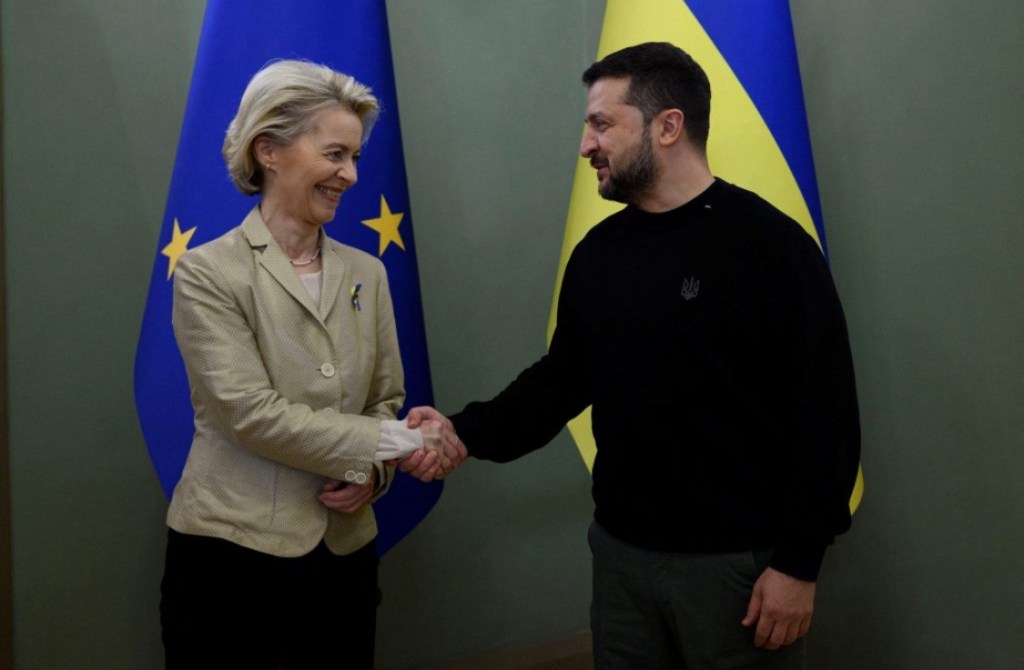
In early November, the European Commission recommended that EU accession negotiations begin with Ukraine. EU leaders are now expected to confirm this decision in mid-December. This would represent a major milestone in Ukraine’s long quest for European integration that would reflect the historic changes taking place throughout Ukrainian society and in the country’s political arena.
In the last week of November, Ukraine marked ten years since the start of protests in late 2013 over then president Viktor Yanukovych’s decision to turn away from an association agreement with the European Union. When thousands of Ukrainians flooded into central Kyiv’s Independence Square (“Maidan Nezalezhnosti”) to oppose this sudden U-turn, Yanukovych responded with a heavy-handed crackdown that transformed a protest movement into a revolution. By the time the Euromaidan Revolution was over three months later, dozens of protesters had been killed and Yanukovych had fled to Russia.
In the immediate aftermath of the revolution, Russia launched a military operation to seize control of Ukraine’s Crimean peninsula. This was to prove the first act in ten years of escalating Russian military aggression against Ukraine that would eventually lead to the full-scale invasion of February 2022.
 Voice of Ukraine