From: Ira Kapitonova in Kyiv (Day 696):
Worship the Lord in the splendor of holiness;
tremble before him, all the earth!
Psalm 96:9
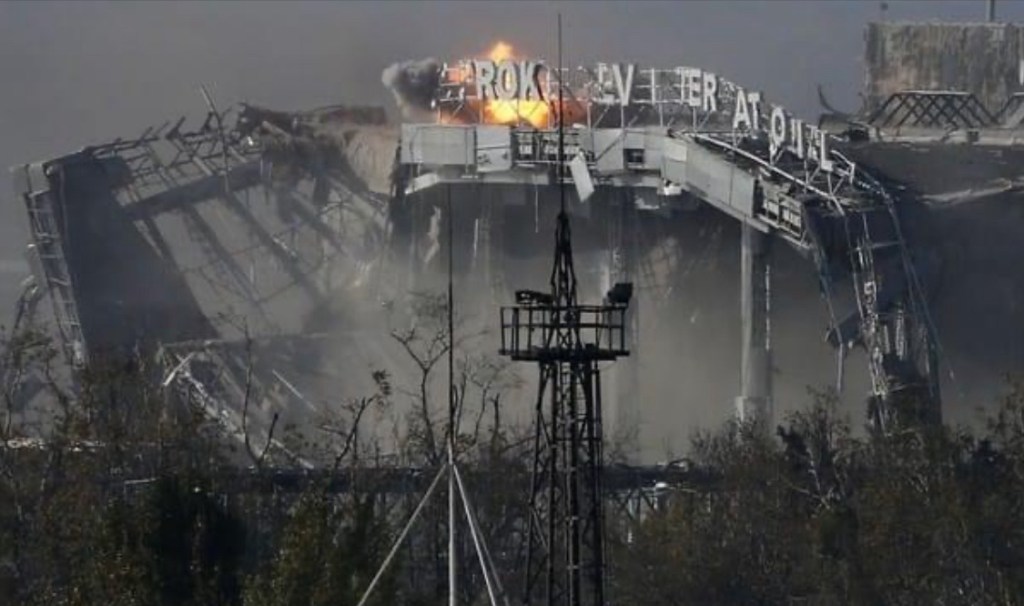
January 20 is the Day of Remembrance of the Donetsk Airport Defenders. The battle for the Donetsk airport lasted for months in 2014. It demonstrated the courage and invincibility of Ukrainian soldiers and became one of the symbolic battles of this war. During the battle, the word Cyborg was used to refer to the Ukrainian defenders of the airport, as that’s what they were called in an intercepted enemy radio communication.
After the fall of the airport (it was utterly demolished), people came up with a phrase that can be loosely translated as “Cyborgs remained standing; it was the concrete that fell.”
Back then, we had no idea how much more cruelty and heroism we had yet to witness.
 Voice of Ukraine
One response to “1/21/2024 – Back then, we had no idea how much more cruelty and heroism we had yet to witness.”
From: War.Ukraine.ua – Natalia Yaroshenko is a volunteer from Sumy, a graduate student in ecology, and the founder of a project on the impact of war on the environment in Ukraine. She began volunteering in 2014 during the Revolution of Dignity. After the beginning of Russia’s full-scale invasion of Ukraine in 2022, her volunteer team has been purchasing and delivering drones, medical supplies, and other necessary items for Ukrainian soldiers.
Natalia’s story was told by Suspilne media.
Natalia Yaroshenko has been volunteering for ten years. It all started with the Revolution of Dignity in February 2014, followed by Russia’s illegal occupation of Crimea and the Donetsk and Luhansk regions.
“Most of the cultural events where I volunteered were related to the military. During these events, we fundraised for thermal imagers, vehicles, and drones (…) Volunteering somehow sustained my mental health at that time and helped create the community I am still a part of today,” says Natalia.
When Russia’s full-scale invasion of Ukraine began in 2022, Natalia was doing scientific research in Germany. “From the beginning of the full-scale war, I had established contacts and logistical routes already in place. This helped me organize active shipments. The first days of the full-scale war were more about logistical routes,” recalls Natalia.
Continue Reading
LikeLike