From: Maia Mikhaluk in Kyiv (749th day): I recently finished reading the book Age of Red Ants by Tatiana Piankova. It describes one of the most tragic pages of Ukraine’s history – the Great Famine of 1932-33 when the Soviets took away all the grain all the food from villages and systematically killed villagers in an excruciatingly painful slow way by starvation. It was probably one of the most painful books I have ever read. It so graphically describes the horror of dying from hunger. I hope it will get translated into English and people in other countries can read it and better understand the nature of ruzzia-Ukraine relations.
The image of red ants in the book is symbolic of Soviets who were devastating Ukraine then. It hurts, even more, to realize that today’s descendants of those “red ants”, ruzzians are trying to do the same thing on occupied territories – trying to take revenge on us:
“Red ants breed, gather in colonies, quickly spread throughout Ukraine – its cities, villages, farms… They empty our pantries, our chests, our pockets, take away our mothers and children, destroy us, take us out of the world… They take revenge on us… For what are they taking revenge? Maybe for the fact that we want to be people, to own our land, to grow bread, apples, and sunflowers on it? For the fact that we want to feed our children with milk, not tears? That we pray to God, and not to their red female – to their great Mother, whom they call the Motherland?
…Their anthills grow on the ashes of our houses, our churches, our shrines. Their red zeal is terrifying. And all we can do is watch as the circle turns red around us and washes away…”
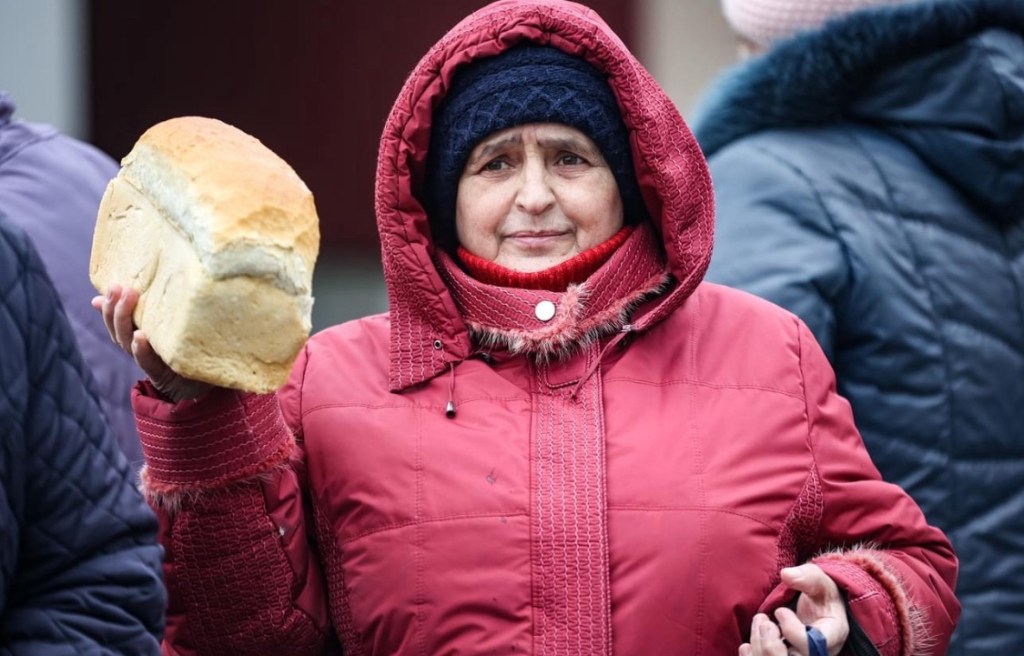
Uman church Resurrection of Christ was recently distributing bread to people in need in their city. They do it periodically and they call it a Day of Bread. Looking through the pictures of that day, I keep thinking about the book Age of Red Ants. Bread is treasured by Ukrainians in a very special way because of the memory of the Great Famine deeply rooted. The scar of that tragedy is on the hearts of generations that grew up never even experiencing hunger. The current war will leave more scars.
 Voice of Ukraine