Ten years on from Russia’s annexation, with all-out war making its dominance vulnerable, authorities are increasing a crackdown on pro-Ukrainian voices – while others simply want to live their lives
From: The Guardian by Shaun Walker in Kyiv and Pjotr Sauer
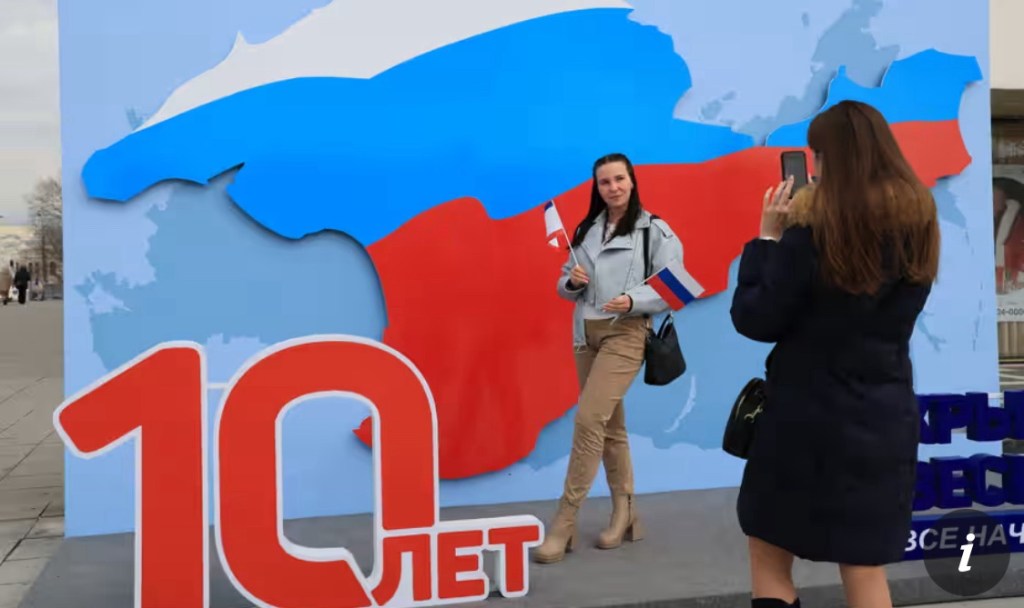
“Ten years of the Crimean spring,” say billboards around the Crimean peninsula. “It all started with us.”
The Russian presidential election, to be held over three days at the end of this week, coincides with the 10-year anniversary of Russia’s annexation of Crimea in 2014. The swift seizure of the peninsula in March that year, Vladimir Putin’s response to the Maidan Revolution in Kyiv, was indeed the beginning of 10 years of military action against Ukraine.
At the time, although almost no other countries recognised the annexation as legitimate, most people believed Russian rule was likely to remain in Crimea for decades. Since the start of Russia’s full-scale war on Ukraine, however, the situation has become increasingly unpredictable.
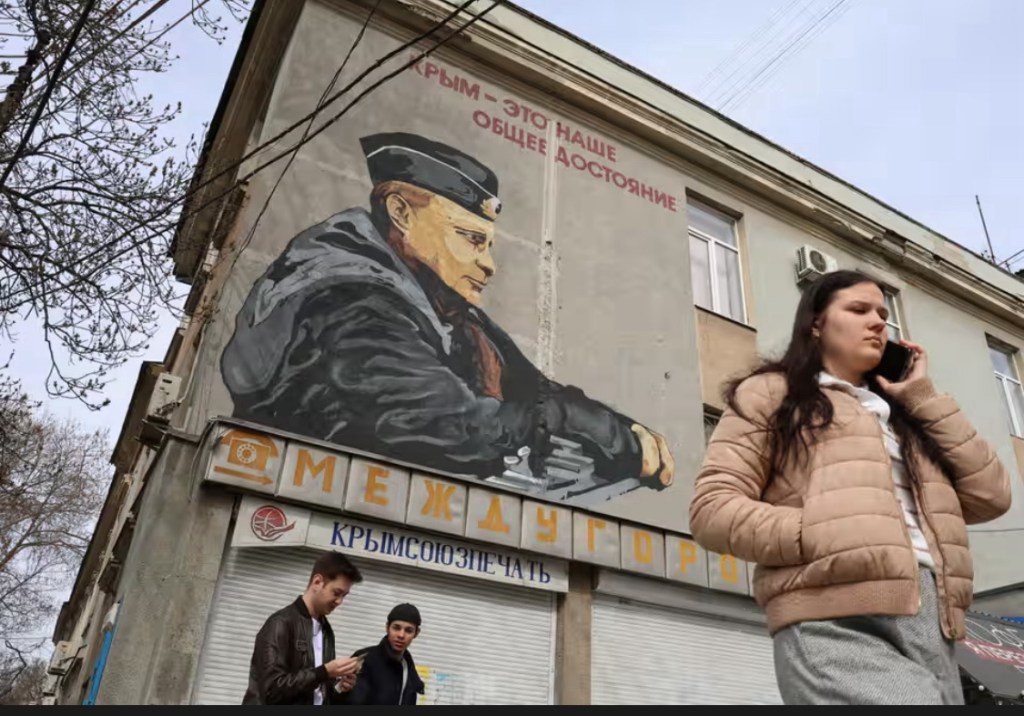
The stalling of Ukraine’s counteroffensive makes it highly unlikely that Kyiv could take back Crimea militarily any time soon, and the brief period of optimism in late 2022 when top officials described the return of Crimea as “inevitable” has long dissipated. But the two years of war have exposed Russian dominance of the peninsula as vulnerable for the first time since 2014.
 Voice of Ukraine