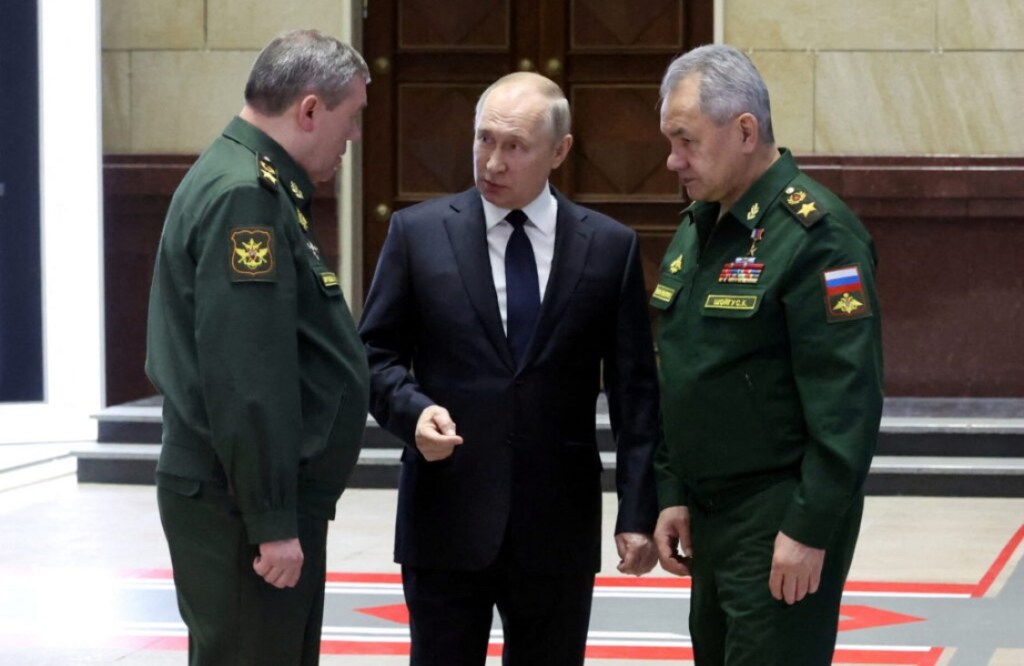
The International Criminal Court in The Hague has this week issued arrest warrants for former Russian Defense Minister Sergei Shoigu and Russian army chief Valeriy Gerasimov for alleged war crimes and crimes against humanity committed during the invasion of Ukraine. Both men face charges related to the bombing of Ukraine’s civilian energy infrastructure during the first winter of Russia’s full-scale invasion. Shoigu and Gerasimov are the latest in a series of senior Kremlin officials including Russian President Vladimir Putin to be targeted with criminal charges relating to the invasion of Ukraine.
The ICC first opened proceedings into Russia’s invasion in March 2022. One year later, arrest warrants were issued for Putin himself and the Russian President’s human rights ombudsman, Maria Lvova-Belova, over the mass abduction of Ukrainian children. Ukrainian officials say thousands of Ukrainian children have been deported to Russia since the start of the full-scale invasion, with many adopted into Russian families or sent to camps where they are subjected to ideological indoctrination designed to erase their Ukrainian identity. This may qualify as an act of genocide, according to the UN’s 1948 Genocide Convention and the Rome Statute.
In March 2024, the ICC announced new arrest warrants for Russian Air Force long range aviation chief Sergei Kobylash and Russian Black Sea Fleet commander Viktor Sokolov in connection with the bombing of Ukraine’s power grid. ICC prosecutors aim to charge the Russian commanders with the alleged commission of war crimes and crimes against humanity because they say the bombing campaign was part of a state policy of widespread attacks on the civilian population.
This week’s warrants represent a significant step forward in efforts to hold Russia legally accountable for crimes committed in Ukraine. The latest suspects are top Russian military officials and key figures alongside Putin in the leadership of the invasion. Both Gerasimov and Shoigu would be potential suspects in a future prosecution for the crime of aggression. However, the ICC does not have jurisdiction over this crime, while plans to establish a special tribunal remain at the early stages.
 Voice of Ukraine