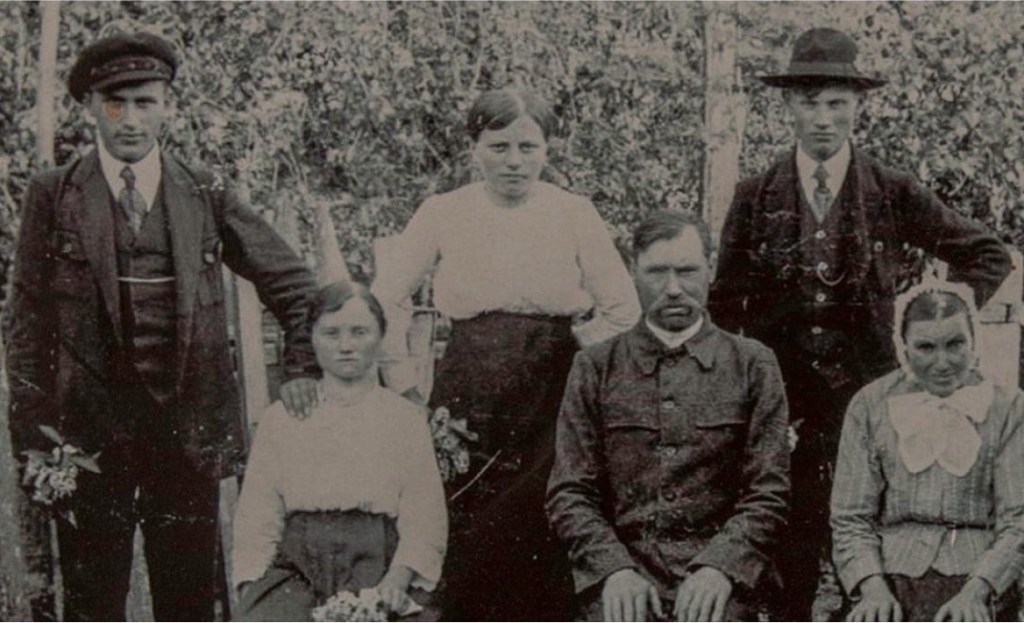
The Story of the Zubah Hollanders
The mostly unknown today ethnic group of Zabuh Hollanders had lived in the west of Ukraine since the late 18th century. Despite scientific theories relating their origins with Dutch or German colonists, the Zabuh Hollanders lacked a clear understanding of where they came from.
“Our ancestors do not belong with the Poles and neither do they belong with the Germans,” says the Zabuh Hollander Karl Ludwig.
In 1939, the Third Reich and the USSR signed the Molotov-Ribbentrop Pact that effectively divided Europe. Its complimentary “Confidence Protocol” addressed the issue of the Zabuh Hollanders, among other matters. The Third Reich considered the Hollanders to be German people, seeking to relocate them to the Nazi-controlled territory to prevent their assimilation among the Slavs.
After World War 2 broke out, the Zabuh Hollanders had to choose between the Third Reich and the Soviet Union. Even despite not identifying as Germans, most Hollanders were compelled to leave for Germany. Inhabiting the territory of Volyn that was to be ceded to the USSR, they would struggle to adapt to the life in the Soviet Union they had no ties with.
They were promised good jobs, higher salaries, and better food provisions; in reality, the local German population refused to perceive the Hollanders as their equals.
Those Hollanders who refused to move to Germany soon faced an even worse fate. The Soviet authorities considered the Hollanders as Germans, viewing them as supporters of the Third Reich by default. Early in the war, they were stigmatised as “unreliable elements” and gradually deported to labour camps in Siberia.
The few Zabuh Hollanders, who managed to remain in Volyn, had to pay for their relative safety in the USSR with the loss of their identity.
“The history was silenced in my family because they were afraid, living in the Soviet Union at the start of the Second World War with all the deportations to Siberia occurring. It was rumoured that my great-grandpa was also considered for deportation,” recalls their descendant.
This proves that Ukraine is a multinational country with many national communities and indigenous peoples, living next to each other peacefully. Unfortunately, many of them had suffered from Russian repressions, deportations, and the policy of Russification, and also found themselves in between Nazi Germany and the USSR.
For nearly a century and a half, the Zabuh Hollanders greatly contributed to the rich tapestry of traditions in Ukraine’s west. Tragically, Russian deportations, and forced assimilation has not spared this unique community, whose legacy now serves as a solid foundation that strengthens Ukraine’s resolve for a free future.
Learn more about the unique legacy of the Zabuh Hollanders and Ukraine’s cultural diversity with Ukrainer’s long read “The Zabuh Hollanders of Ukraine. Who are they?”: https://www.ukrainer.net/zabuh-hollanders/
 Voice of Ukraine