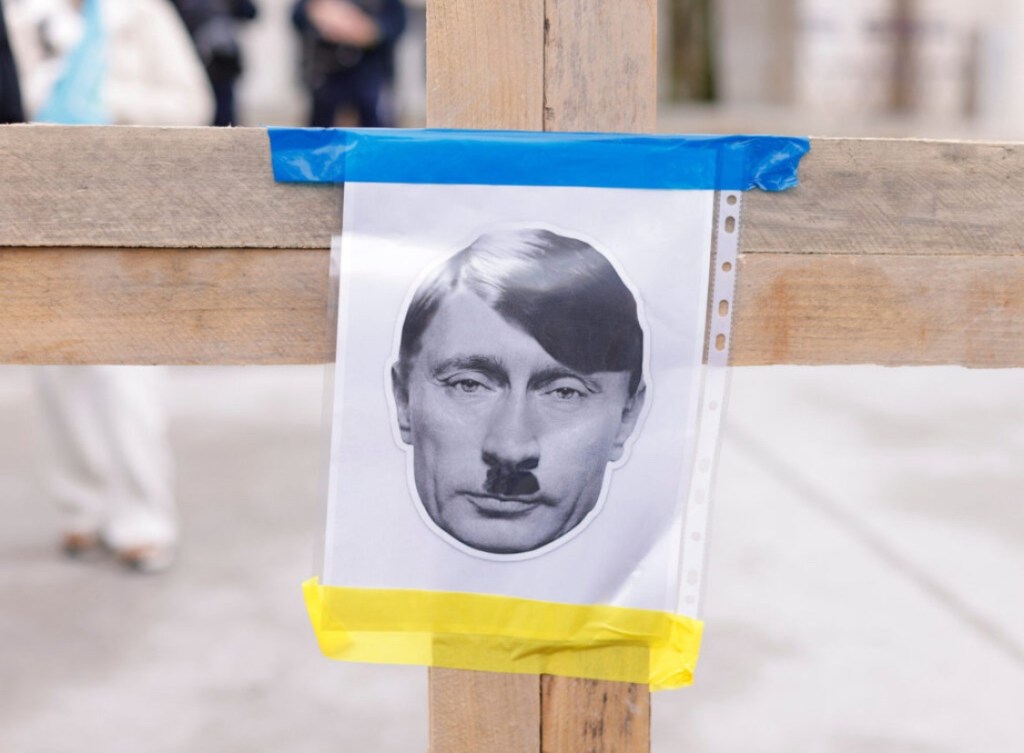
When Vladimir Putin first began the invasion of Ukraine with the seizure of Crimea, he did so using troops without identifying insignia and was careful to hide his attack behind a veil of deniability, however implausible. Ten years later, the Russian dictator now routinely threatens Western leaders with nuclear apocalypse if they dare to disrupt his methodical destruction of Europe’s largest nation. This dramatic escalation in Russian aggression is the bitter fruit of a decade spent trying to avoid provoking Putin rather than confronting the Kremlin.
In 2014, the West chose not to impose any significant costs on Russia for the occupation of Crimea and the subsequent invasion of eastern Ukraine’s Donbas region. At the time, many preferred to pursue a business as usual approach, strengthening trade ties with Moscow and constructing new gas pipelines to deepen Europe’s energy dependence on the Kremlin. Unsurprisingly, Putin interpreted this timidity as a tacit green light to continue, safe in the knowledge that performative Western outrage was unlikely to translate into action. The stage was thus set for the largest European invasion since World War II.
Since February 2022, Russia’s full-scale invasion of Ukraine has transformed the geopolitical landscape, but it has so far failed to convince Western leaders of the need to abandon their failed policies of escalation management. Instead, the international response to Russia’s invasion has been hampered at every turn by delays and indecisiveness, with Kyiv’s partners denying the country vital weapons and imposing absurd restrictions on Ukraine’s ability to defend itself. As a result, the Ukrainian military currently finds itself forced to fight an existential war with one hand tied behind its back.
 Voice of Ukraine