From: Intelligencer By Benjamin Hart
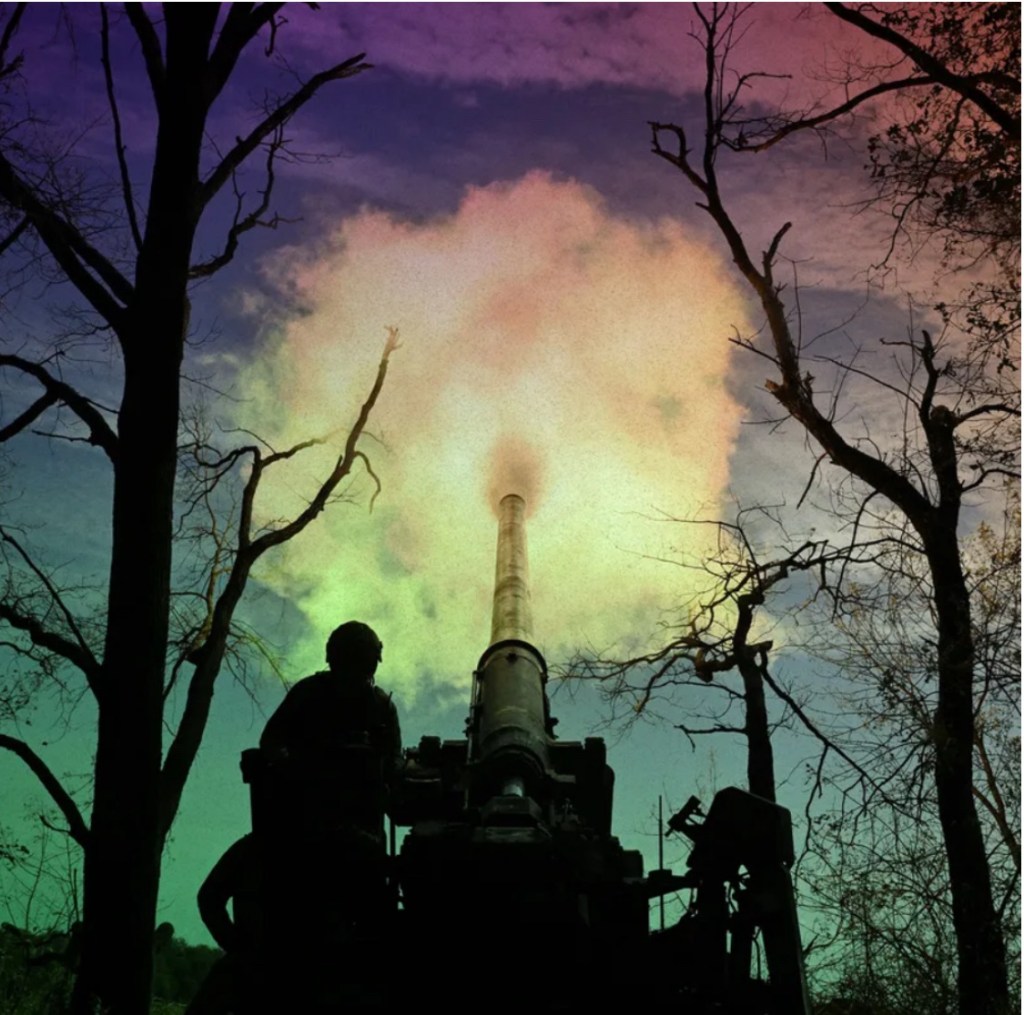
It has not been a good few months for Ukraine. Russia is slowly but steadily gaining ground in the country’s Donetsk region, where its forces bombard towns and cities, overwhelming an exhausted Ukrainian military. A regional war in the Middle East has eclipsed the refocused western allies elsewhere. The prospect of another Trump presidency, and the political unpredictability that would entail, looms large. Yet Michael Kofman, a senior fellow at the Carnegie Endowment for International Peace who has written and commented extensively on the war, thinks the narrative of impending Russian domination is too simple. I spoke with him about the state of play on the battlefield, Ukraine’s surprise incursion into Russian territory, and Vladimir Putin’s recent nuclear saber-rattling.
Thanks for speaking with me again for the third time in the last two years.
Sure, Ben. What did you want to talk about today?
This may come as a surprise to you, but the Russia-Ukrainian War is the main topic.
Nobody calls me for my cooking recipes.
We can do a section on that at the end if you want.
I’m an avid fan of barbecue.
This is how the Washington Postrecently described the larger dynamic in Ukraine: “Enemy troops are storming the battlefields in small teams that minimize detection and make return fire difficult, backed by superior quantities of artillery and drones. Russia has also improved its battlefield communications, helping coordinate attacks and while losses are staggering, Ukrainian soldiers have said the Russians have the numbers to keep up the pressure and Western aid isn’t making up the equipment deficit.” Does that strike you as pretty much an accurate depiction of where things are on the front?
I would quibble with some pieces of that, but in general, I think it’s fair. My own view is that Russia has enjoyed a materieladvantage and the overall initiative for the past year. That advantage hasn’t proven decisive, at least not sufficiently enough to enable operational-size breakthroughs. But Russian forces have been steadily pressing the Ukrainian military in Donetsk and in other parts of the front — for example, by Kupiansk. And despite the costs, as you mentioned, both to materiel and personnel, they’ve been making fairly steady incremental gains.
Last week, the town of Vuhledar, in Donetsk, officially fell after being under attack for more or less the entire war. Pokrovsk, to the west, may be in Russia’s sights over the next few weeks. How far do you think they can go in the near future? And to what extent are they limited by the impending winter?
Weeks is unlikely for Pokrovsk, but I think it will become the site of one of the next major battles. Russian forces have focused on trying to flank south of the city right now, taking the town of Ukrainsk, attempting to close a pocket by Kurakhove, and most recently taking Vuhledar. I think we are seeing both sides position for the siege of Pokrovsk. The Russian military is now pressing Ukrainian defensive lines outside the city, and the eastern half of the city is within artillery range. Pokrovsk is an important logistics hub, although its military value, I think, is going to rapidly decline at this stage. Russian forces are also pushing at Toretsk and around Chasiv Yar. It’s clear that their primary objective remains the capture of the rest of the Donetsk region. I think one of the main outstanding questions is to what extent can the Ukrainian military stabilize the front and exhaust the Russian offensive over the course of this fall and winter.
 Voice of Ukraine