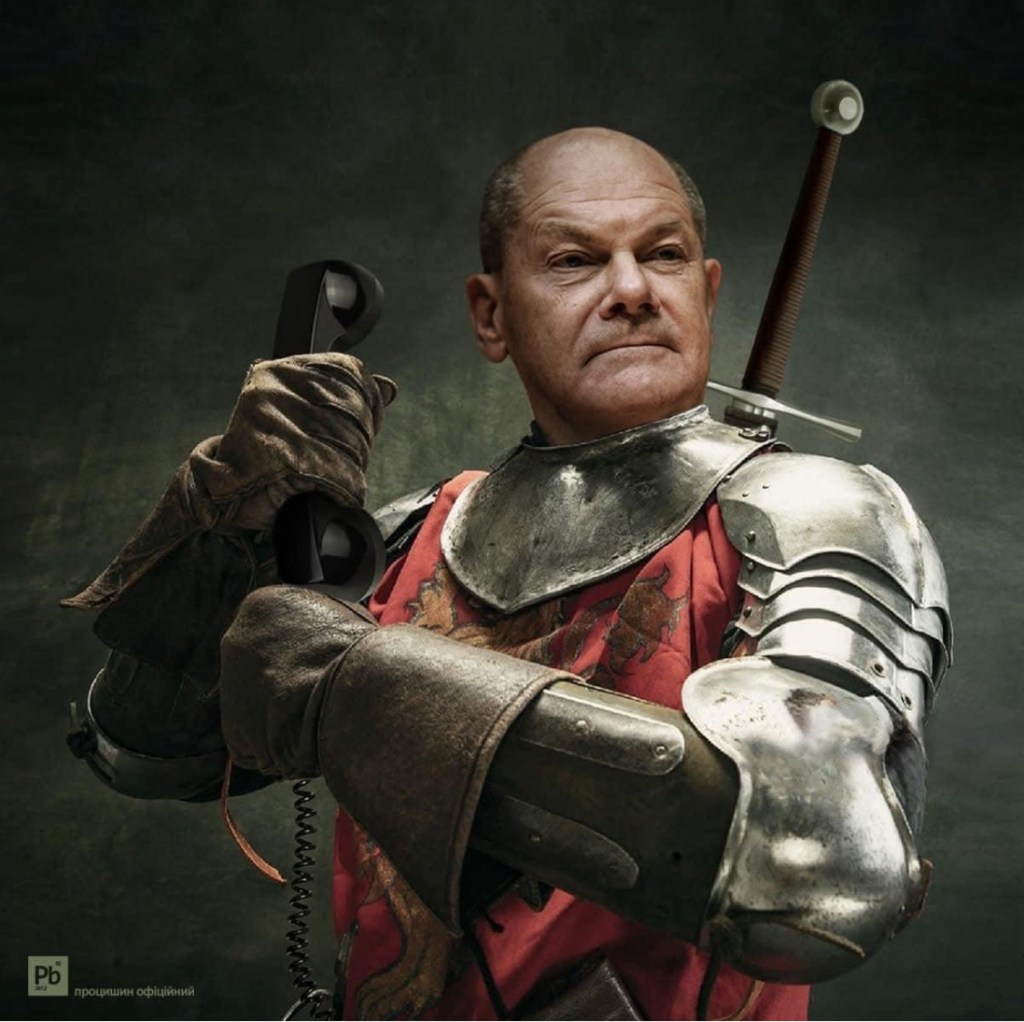
From: Roman Sheremeta (Professor of Economics, Board Member, Founding Rector of American UniversityKyiv ) — Olaf Scholz is a modern-day “knight” of Europe – or, perhaps more accurately, a lame duck.
Somehow, this “knight” thought he was being clever by initiating a conversation with Putin. Likely, his intention was to signal to Trump that he is a European “peacemaker.”
Putin, however, accepted the call for an entirely different reason. To him, Scholz’s outreach was a sign of weakness – an indication that Europe might be ready to capitulate and plead for mercy.
In Putin’s eyes, Europeans are merely puppets of the U.S. By showing weakness, Scholz inadvertently strengthened Putin’s negotiating position with Trump.
Following the call, Putin reportedly presented Scholz with a long list of capitulation terms and broadcasted these demands across russian state media. The very next day, he launched one of the largest missile attacks on Ukraine, killing civilians and destroying infrastructure.
Why would the lame-duck Scholz take such an action? Why haven’t European leaders learned anything from the past 100 years of dealing with this “empire of evil”?
Russian tactics have remained unchanged since Soviet times and are well-documented by Alexey Gromyko, the renowned Soviet-era foreign minister. Their strategy is built on three principles:
- Demand the maximum: Don’t request, but demand things that were never yours to begin with.
- Present ultimatums and threats: Use pressure as leverage.
- Concede nothing: Hold firm, knowing that there will always be Western leaders willing to make concessions.
 Voice of Ukraine