From: New Voice of Ukraine 🇺🇦
Raimund Andrzejczak, former Chief of the General Staff of the Polish Armed Forces and now working with an Estonian defense company connected to Ukraine, reflects on the war and shares his predictions for the future.
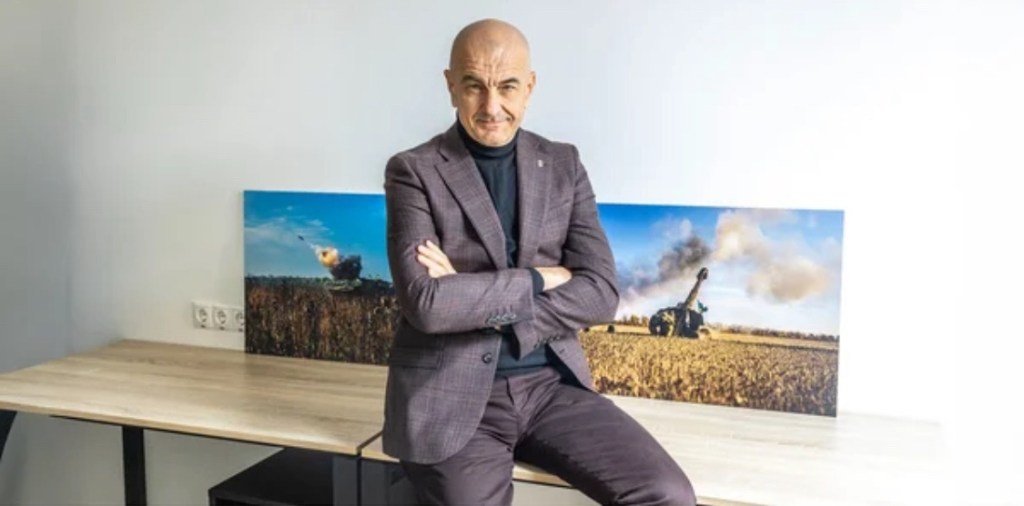
NV met with Andrzejczak, who served as Poland’s top military officer from 2018 to 2023, on a tense November morning in Kyiv. Witnessing the overnight missile attacks on the city, he expressed admiration for Ukraine’s air defense systems, calling the sounds of the intercepts a “symphony” to a soldier’s ear.
This isn’t Andrzejczak’s first visit to Ukraine. The Estonian defense company Frankenburg Technologies, where he now serves as an advisor, plans to set up production of its C-UAV interceptor missiles in Ukraine. Media reports suggest the first batches of these cost-effective missiles, designed to neutralize drones at altitudes up to 2 kilometers, will be delivered to Ukraine by the end of 2024.
“This is a fast and efficient solution for Ukraine,” he explained, “especially since it’s currently forced to use more expensive and complex weapons to combat Russian drones.”
During the interview with NV, Andrzejczak addressed strategic issues, reflecting on the war as it nears its 1,000th day. He highlighted Ukraine’s vulnerabilities, criticized the West for delays and lack of cohesive actions, and drew lessons from history on how to shape a winning strategy against Russia.
Q: As we approach the 1,000th day of Russia’s full-scale invasion, what are your key takeaways from this war? How would you characterize the current situation for Russian and Ukrainian forces?
A: It’s important how we measure this war. You say 1,000 days, but it’s been much longer since 2014. We need to see this as part of Russia’s broader strategy—a systematic approach with a long-term design. So, counting from 1,000 days isn’t the best perspective. Wasn’t the invasion of Crimea in 2014 a full-scale invasion too?
 Voice of Ukraine