GET UP TO SPEED
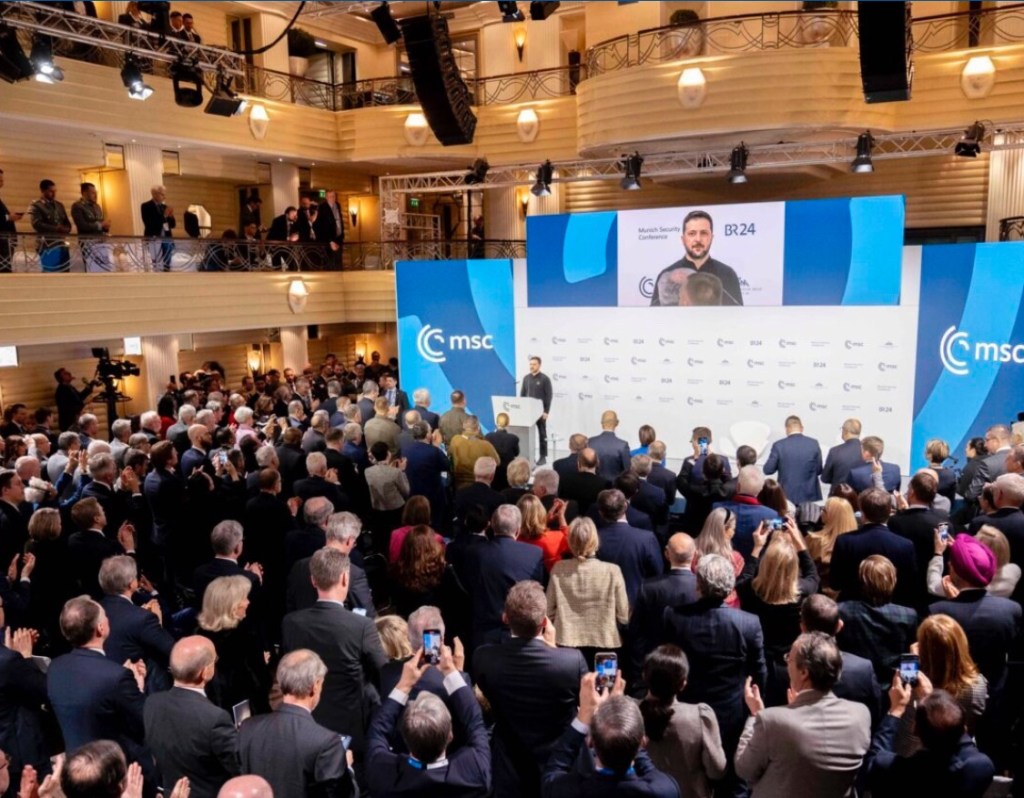
The table has been set. In the coming days, US and Russian negotiators reportedly will meet in Saudi Arabia to try and strike a deal to end Russia’s full-scale war against Ukraine. The news broke at the Munich Security Conference, where the war’s future dominated discourse among world leaders at the annual gathering. To understand the significance of what was said on the Munich stages, behind closed doors, and in the corridors between, we turned to Atlantic Council experts who were on site at the Hotel Bayerischer Hof.
TODAY’S EXPERT REACTION BROUGHT TO YOU BY
- John E. Herbst (@JohnEdHerbst): Senior director of the Atlantic Council’s Eurasia Center and former US ambassador to Ukraine
- Anna Wieslander (@AnnwieAnna): Director for Northern Europe at the Atlantic Council and former official at the Swedish Defence Ministry and Swedish Parliament
- Jörn Fleck (@JornFleck): Senior director of the Atlantic Council’s Europe Center and former European Parliament staffer
Mixed messages
- In the whirlwind of US President Donald Trump’s first month, “no week has featured more intensive activity to negotiate an end to Moscow’s war of aggression against Ukraine than this past one,” John tells us.
- But Trump and his top lieutenants, including Vice President JD Vance and Defense Secretary Pete Hegseth, have sent conflicting messages regarding how tough they plan to be on Russian President Vladimir Putin. John notes that in recent days Trump said that Ukraine “may be Russian some day,” but the president also stated that the United States will continue to provide aid to Ukraine because otherwise “Putin would say he had won.”
- The week’s most significant development, John argues, may have been US Treasury Secretary Scott Bessent’s meeting with Ukrainian President Volodymyr Zelenskyy, where they discussed the possibility of a deal to provide the United States with rare-earth and critical minerals in exchange for US weapons. Although the parties did not reach an agreement, “it is significant that the transactional Trump sees a concrete business and security prize for engaging Ukraine and ensuring its long-term survival and sovereignty,” John observes.
 Voice of Ukraine