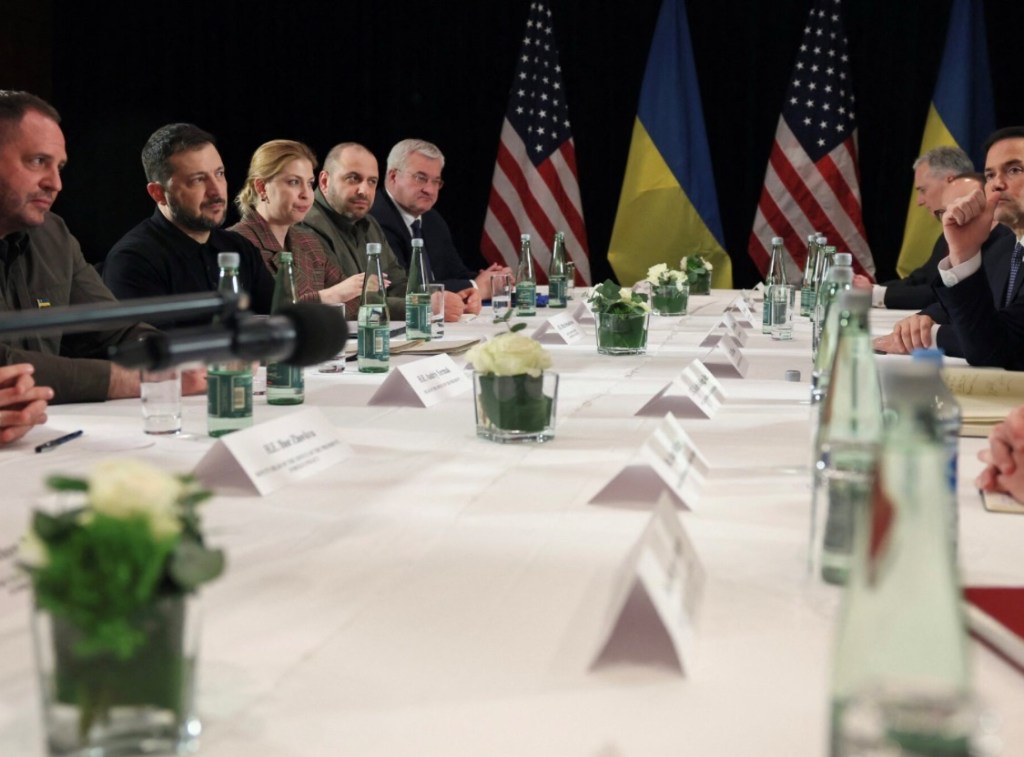
Before boarding my flight home from Europe to Washington, DC, I took Finnish President Alexander Stubb’s advice for those unsettled by the transatlantic acrimony surrounding last weekend’s Munich Security Conference. After a Helsinki-style sauna and cold bath at my hotel, I’m ready to process the events of the past week in their historic context.
In a conversation with me on the sidelines of the Munich gathering, Stubb focused on the long game while other European leaders were still reeling from US Vice President JD Vance’s broadside attack on European democracy and his de facto endorsement of Germany’s furthest right party ahead of the country’s elections on Sunday.
“We rationalize the past, overdramatize the present, and underestimate the future,” he told me, laying out his thinking on how to responsibly end Russia’s war in Ukraine in the days ahead. He envisioned a process in three distinct stages. First pre-negotiations would focus on strengthening Ukraine’s position. A ceasefire would follow that establishes a line of contact, confidence-building measures, security arrangements, and peace modalities. Then, and only then, peace negotiations would take place that not only end the war but also ensure Ukrainian sovereignty, independence, and integration into Western institutions.
 Voice of Ukraine