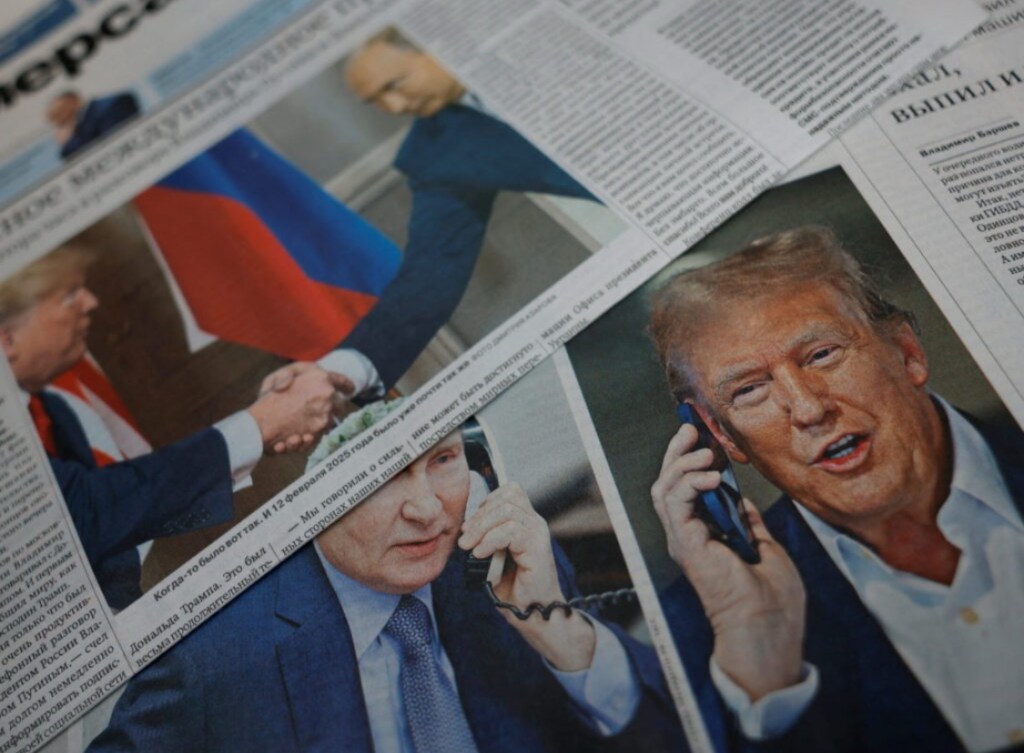
For months, US President Donald Trump and allies such as Senator Lindsey Graham have stated that if Russian President Vladimir Putin rejects peace efforts, the United States will impose new sanctions to bring Russia to the negotiating table. So far, however, the Kremlin has refused to join Ukraine in accepting a US-proposed ceasefire. Instead, Putin has this week demanded sanctions relief in exchange for a limited maritime ceasefire that favors Russia. It may now be time to consider putting more pressure on Moscow.
Putin certainly does not appear to be very interested in ending the war. Since agreeing to a pause on energy infrastructure attacks during a March 18 call with Trump, he has launched multiple large-scale drone and missile bombardments of Ukrainian civilian and energy targets.
If the US uses sanctions alone to pressure Putin, the impact will not be felt immediately. In order to get the Russian leader’s attention, new sanctions must be paired with tougher enforcement of existing sanctions and expanded military assistance to put Ukraine in a better position on the battlefield. More than anything else, the military reality on the ground in Ukraine is the deciding factor in efforts to end the war. Luckily, this is the area where Trump has the greatest ability to shape perceptions.
 Voice of Ukraine