It’s not just about extracting lithium and titanium – it’s about capturing the entire decision-making machinery of a sovereign state.
From: Euromaiden Press BY KHUSANBOY KOTIBJONOV
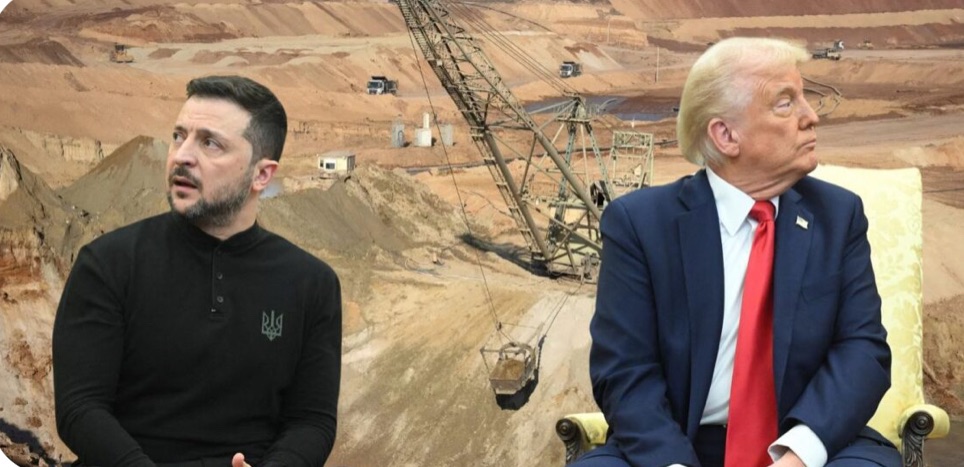
In late February 2025, the United States and Ukraine appeared close to signing a framework agreement on mineral development and postwar reconstruction. The deal was widely seen as an uneasy compromise but politically tolerable.
Yet, during President Zelenskyy’s visit to Washington, a tense confrontation with President Trump and Vice President Vance ruined the process. The agreement, printed and prepared for signature, was left on the table: unsigned and suddenly uncertain.
A month later, reports emerged of a significantly expanded version of the proposal: not a memorandum, but a comprehensive legal framework with broader scope and greater complexity. Although the authenticity of the draft has not been officially confirmed, its institutional architecture, reviewed by regional analysts and legal experts, marks a clear departure from the principles of equal partnership.
If accurate, the new proposal transforms reconstruction from partnership into transaction. Instead of offering investment in exchange for shared security, it ties support to the sale of Ukraine’s natural resources on terms set by Washington. What’s being constructed isn’t just a fund – it’s a system of control that can bypass Ukraine’s own laws, sideline its parliament, and hand decision-making power to foreign officials.
This agreement abandons the usual model of postwar support. Instead of following established patterns like the Marshall Plan, it creates an entirely new system designed to give long-term control to the outside power that builds it. By embedding inequality into the structure of the fund, the deal threatens to transform Ukraine’s recovery from a joint effort into a form of managed dependence.
 Voice of Ukraine