From: New Voice of Ukraine By: Demian Shevko
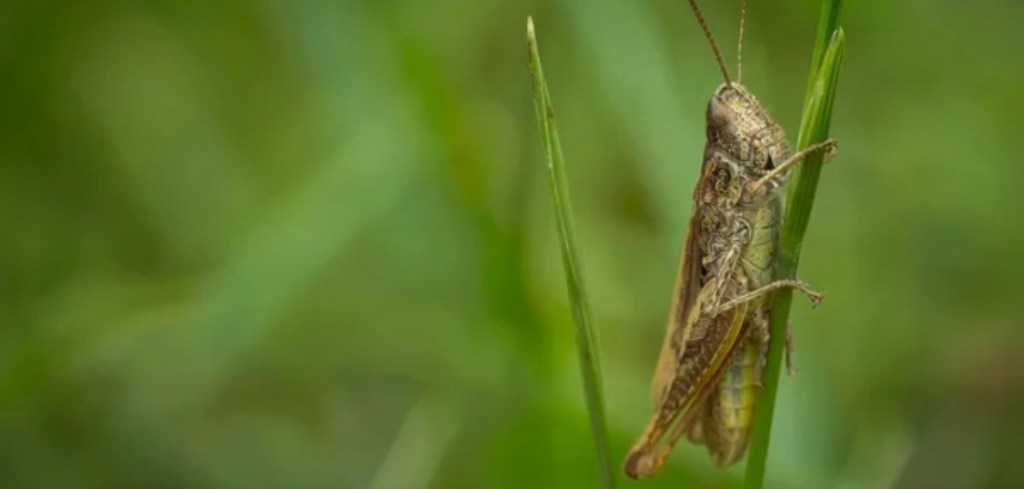
A massive locust infestation is threatening sunflower and other crops in southern Ukraine, driven largely by the war, which has made it impossible to use traditional pest-control methods, officials and producers told Reuters.
Locusts, capable of wiping out vast areas of crops in just days, typically breed in remote spots along rivers or on untilled land — areas that are almost impossible to monitor in regions near the front line.
This summer’s record-high temperatures, the inability to use aircraft for spraying, and the absence of birds — natural predators of locusts that avoid combat zones — have worsened the situation.
Local and government officials declined to give figures on the scale of the outbreak or the damage so far. Ukraine is the world’s largest exporter of sunflower oil and, before the war, was the fifth-largest wheat exporter.
In Zaporizhzhya Oblast, swarms blanket roads, fields, and shrubs, with farmers reporting the insects have destroyed up to one-third of their sunflower crop.
Russia’s 2022 invasion forced farmers to abandon fields in partially occupied southern regions, including Zaporizhzhya, Mykolaiv, and Kherson — all traditionally major producers of grain and oilseed crops.
“The cause of all this is high temperatures, the cause of all this is abandoned land, the cause of all this is Russian aggression,” Ukraine’s chief phytosanitary inspector, Vadym Chaikovskyi, told Reuters.
Denys Marchuk, deputy head of Ukraine’s largest agricultural producers’ union, UAC, said Russia’s destruction of the Kakhovka Hydroelectric Power Plant two years ago created vast swaths of wetlands, providing ideal breeding grounds for locusts.
 Voice of Ukraine