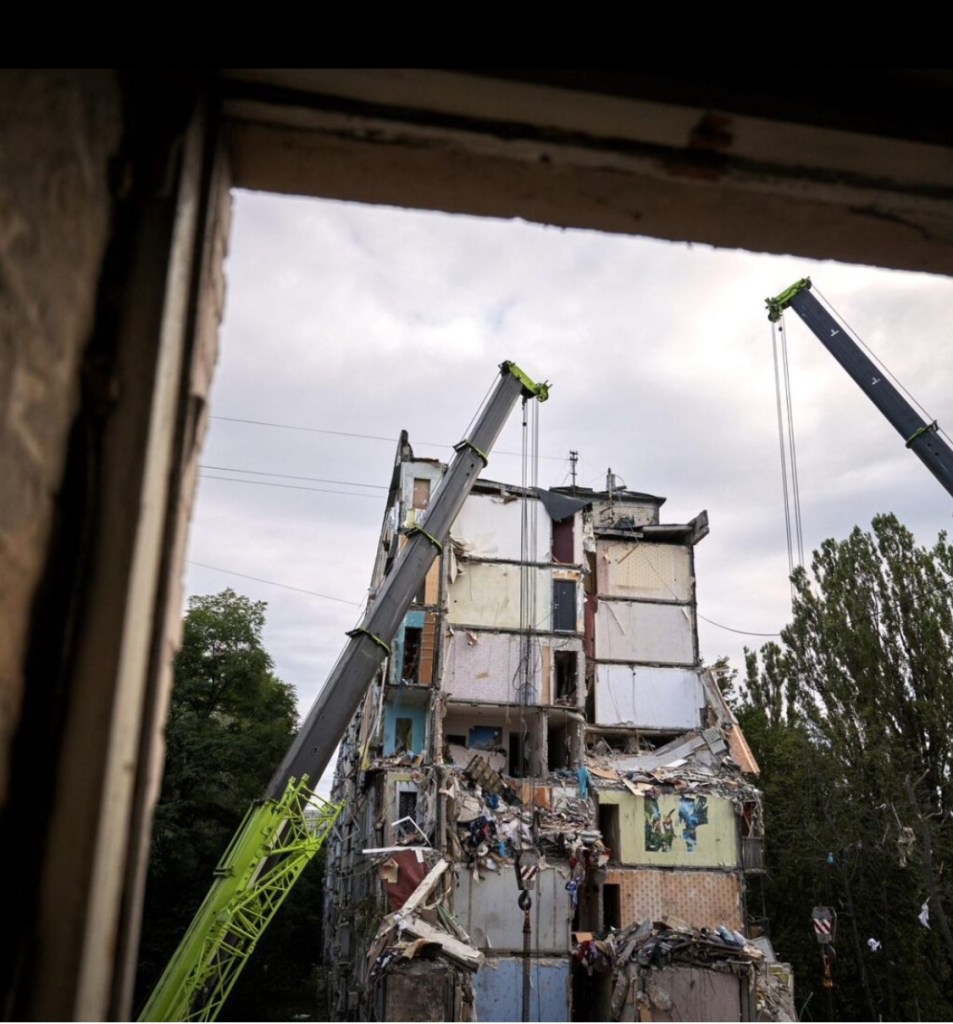
From: Ukrainer.net by Kyrylo Cyril Kutcher
Russia’s war on Ukraine has been marked by an aerial terror campaign unprecedented in Europe since the Second World War. Over three and a half years of the full-scale invasion, it has laid waste to cities like Mariupol and continues to relentlessly terrorise the capital, Kyiv, along with nearly every region of Ukraine, with missile and drone attacks.
This series of articles puts the scale of these bombardments into perspective by comparing them with historic bombing campaigns — from the London Blitz to Russia’s obliteration of Grozny. The comparisons reveal that the level of destruction inflicted on Ukraine is virtually unparalleled since 1945, and that for the Kremlin, “peace” usually means pacification by ruin.
Rain of terror — from London to Kyiv
For nearly a century, invaders have been using the aerial terror of the civilian population as a method of breaking their spirit and coercing governments into capitulation. Over 1940–41, the British people persevered through eight months of sustained bombing by the Luftwaffe. A German “lightning war” — Blitzkrieg — was intended to precede an actual invasion of Great Britain. Adolf Hitler unleashed the largest terror of this campaign onto Londoners, destroying and killing indiscriminately, plunging the capital into regular blackouts and forcing its citizens to seek shelter underground, in the Tube.
As Peter Townsend details in Duel of Eagles, on the Black Saturday of 7 September 1940 Londoners were attacked indiscriminately by nearly 1,270 German aircrafts, including a total of more than 600 bombers dropping munitions at their heads over day and night — the highest number on a single date. For 57 consecutive days, air-raid sirens unfailingly replaced weathermen, heralding the imminent and daily rain of terror. Derived from Eagle in Flames by E. R. Hooton, from September to May, the Luftwaffe flew an average of just under 5,000 sorties per month, peaking in October at over 8,000.
 Voice of Ukraine