From: World by William Fleeson
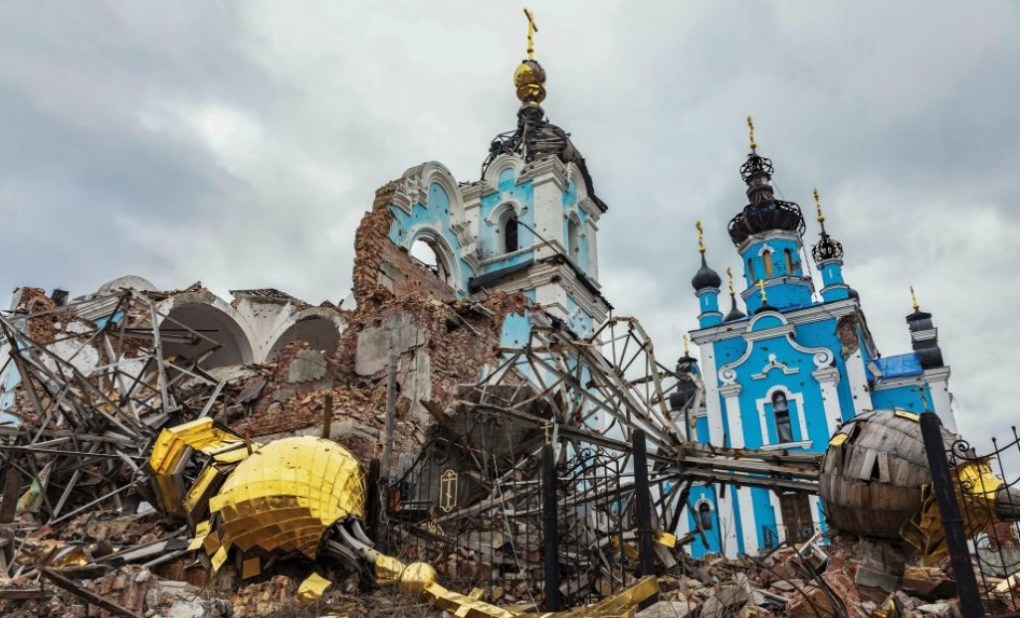
In the middle of Sunday morning service, Russian troops stormed into Grace Church of Evangelical Christians, a Baptist congregation in the southeastern Ukrainian city of Melitopol. The glass in the church’s doors shattered as the Russians, using sledgehammers and military assault tactics, smashed their way in.
The heavily armed men proceeded to arrest, fingerprint, and interrogate dozens of church members. The soldiers confiscated computers, cellphones, records, and other property.
Later, the Russians took the church building itself.
Mykhailo Brytsyn, the church’s longtime pastor, was preaching at another church that morning, Sept. 11, 2022. He later returned to the church grounds and suffered his own Russian interrogation. The questions were a formality, because the Russians planned to shut the church down anyway, extending a pattern across Ukrainian territories under Russian occupation since the start of full-scale war in February 2022.
Several months before the attack on Grace Church, Brytsyn, members of his congregation, and Christians from other denominations held open-air worship services in downtown Melitopol, a local tradition. That custom would later serve as the basis of a twisted accusation from Russia against the pastor and other Melitopol believers.
Brytsyn was forced to leave the city a few days after Russian troops took over his church, he told me, during a series of interviews I conducted with evangelical Christians in Ukraine’s western city of Lviv this May.
I met the pastor and his wife, Svetlana, at a Vienna-style café in downtown Lviv. Brytsyn, who wore his clerical collar, described his interrogation, and the commander who led his questioning.
 Voice of Ukraine