From: Radio Free Europe/Radio Liberty
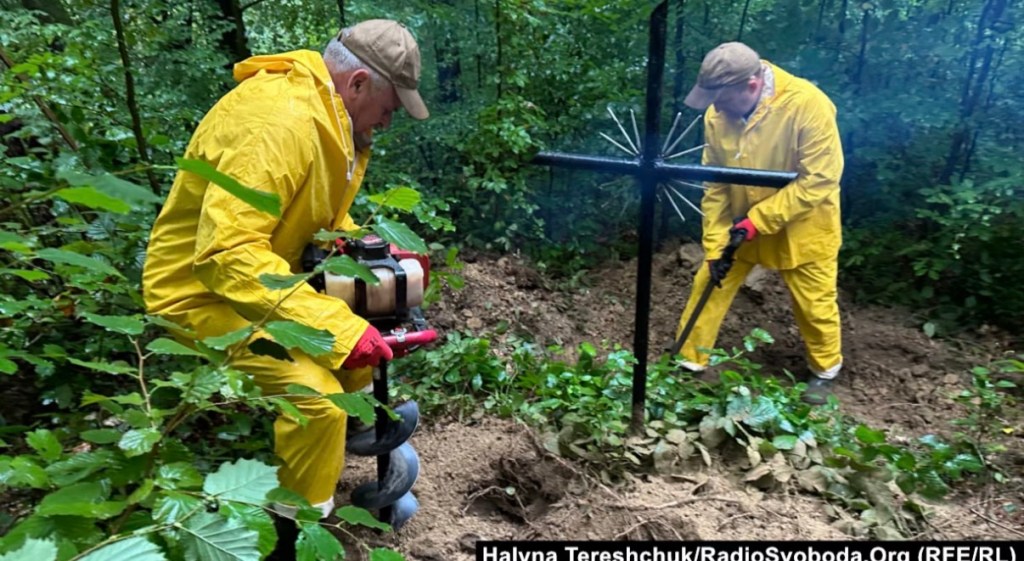
JURECZKOWA, Poland — On a rainy morning on September 30, a team of Ukrainian researchers carefully cut into soil around a metal cross in a forest in southeastern Poland. They were digging for the remains of 18 fighters of the Ukrainian Insurgent Army (UPA).
“According to information we’ve been given, a battle took place just north of here on March 4, 1947,” Svyatoslav Sheremeta, the head of Ukraine’s Dolya Memorial Center, told RFE/RL’s Ukrainian Service in the forest near Jureczkowa, about four kilometers from the Ukraine border. “A local says Polish Army troops brought the dead UPA soldiers here.”
If found, the remains of the men will be exhumed, identified if possible, and then reburied in individual graves.
The expedition is a result of a delicate diplomatic agreement allowing Polish and Ukrainian teams to search select areas of each other’s territory for victims of what Warsaw calls the Volhynian Massacre, and Kyiv refers to as the Volyn Tragedy.
Tens of thousands of people, predominantly ethnic Poles, were killed in the 1940s by Ukrainian nationalists seeking to create an ethnically homogenous territory that would form part of an independent, postwar Ukraine. Thousands of Ukrainians, including civilians, were killed in retaliatory violence. The massacres took place mostly in lands around the nexus of today’s Poland, Ukraine, and Belarus.
 Voice of Ukraine