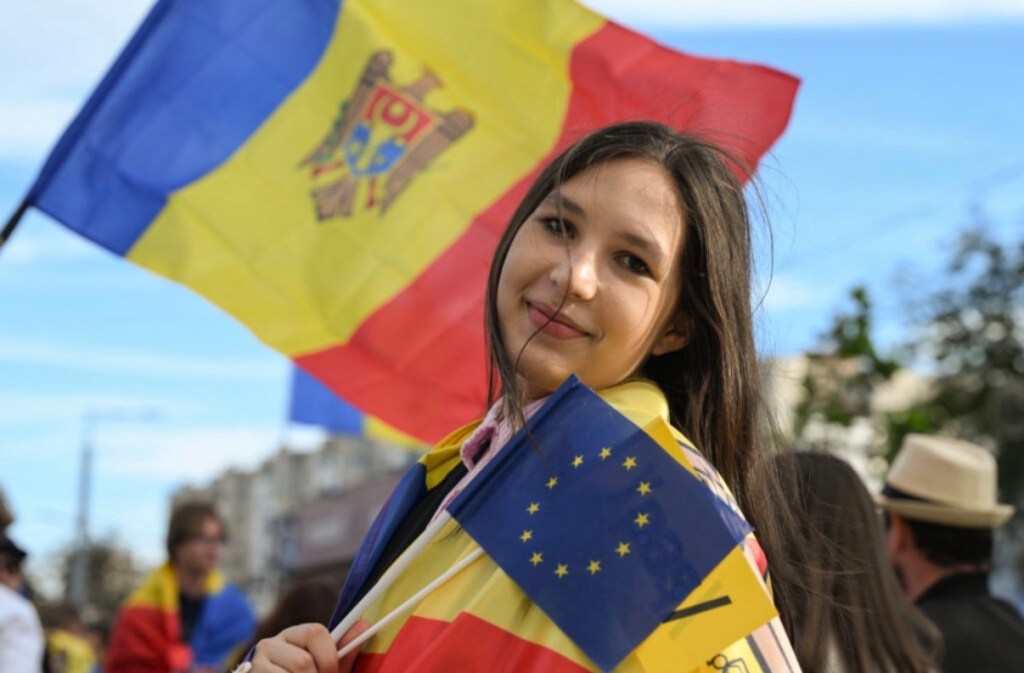
Moldova’s recent parliamentary election was widely billed as a straight choice between rival European and Russian trajectories, with the Kremlin accused of unprecedented interference in a bid to sway the vote in Moscow’s favor.
On the eve of the election, many commentators believed a Russian success was possible. In fact, the final result was not even close. The pro-European party of Moldovan President Maia Sandu emerged as the clear winner, securing a decisive victorywith a little over 50 percent of the vote. Meanwhile, the pro-Kremlin party led by former Moldovan president Igor Dodon was left far behind on 24 percent.
This strong result for Moldova’s pro-European camp represents a major setback for the Kremlin. Crucially, it underscores the challenges Putin faces as he seeks to influence elections and reassert Russian dominance over countries once ruled from the Kremlin at a time when the invasion of Ukraine has raised serious questions about Moscow’s ability to project power throughout its former empire.
 Voice of Ukraine