From: Transform Ukraine By Douglas Landro / October 18, 2025
As Trump courted peace and Putin plotted Budapest, Ukraine faced diplomacy without power and war without end.
The Day’s Reckoning
Three men in three capitals performed a choreography of contradictions.
In Washington, Volodymyr Zelensky sat across from Donald Trump, speaking of missile exchanges while carefully avoiding the word escalation. In Moscow, Vladimir Putin courted Viktor Orbán, preparing a summit that would decide Ukraine’s future without Ukraine. And over Crimea, a Russian fighter pilot died not by enemy fire but by his own air defenses—panic made visible in the night sky.
This was a day when diplomacy and destruction moved in the same rhythm. A two-hour White House lunch could shape the path of Tomahawk missiles; a budget cut in Mari El signaled the strain of Russia’s endless mobilization; fifteen Ukrainian medics were sentenced for the crime of compassion. Every gesture toward peace carried the scent of war. Every promise of restraint masked another escalation.
The world spoke of ending the conflict, yet no one dared imagine the cost of truly stopping it.
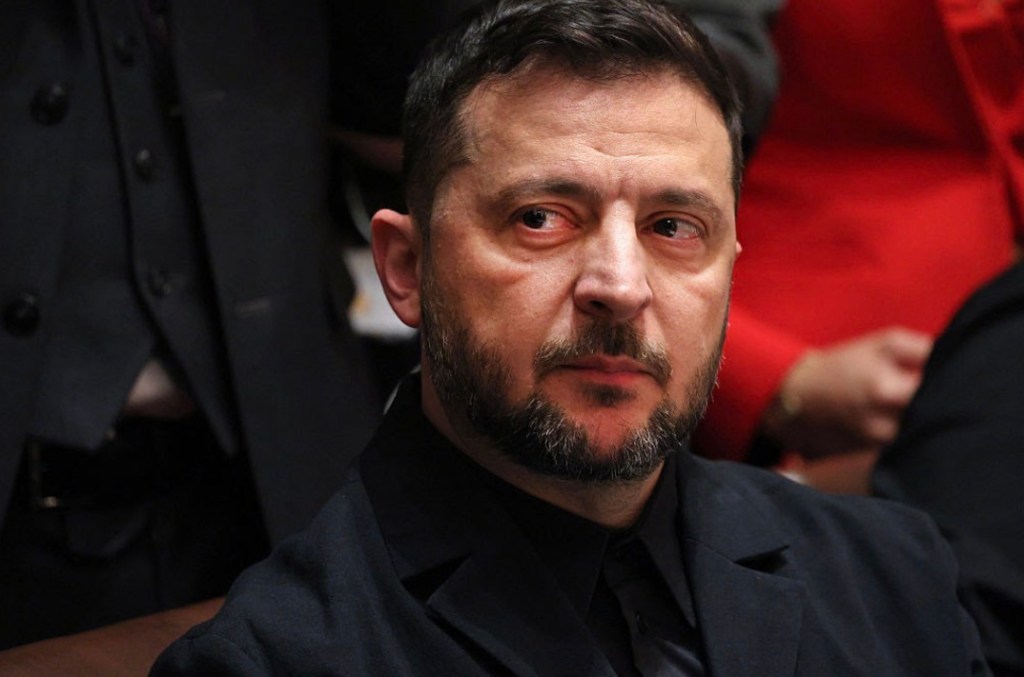
The Oval Office Dance: When Zelensky Met Trump
It began with a compliment meant to erase an insult. Donald Trump smiled across the Cabinet Room table and praised Volodymyr Zelensky’s jacket—an echo of their disastrous February meeting, when he’d mocked the Ukrainian leader for not wearing a suit. “It’s actually very stylish,” Trump said, his tone carrying the weight of reconciliation after months of tension.
But the warmth was surface-level. Beneath it ran the same cold equation: Ukraine’s desperate need for Tomahawk missiles met America’s deliberate hesitation. For more than two hours behind closed doors, the two men circled the question both knew was unspoken. Trump called the missiles “dangerous” and warned of “big escalation.” Zelensky countered with pragmatism—offering drone exchanges, thousands of battle-tested Ukrainian UAVs for a handful of American cruise missiles. It was capitalism recast as strategy; war reduced to negotiation over inventory.
Zelensky had arrived in Washington buoyed by reports of Trump’s growing frustration with Putin, hoping that anger might turn into action. But the president’s tone had shifted after his Thursday call with Moscow. The man who once spoke of liberating all Ukrainian territory now urged both sides to “stop where they are.”
“They should stop right now at the battle line,” Trump told reporters later. “Let both claim victory, let history decide.”
It was the language of exhaustion, not resolve—the sound of a superpower too weary to win and too proud to quit.
The Tomahawk Question: Missiles or Messages?
The word Tomahawk hung over every conversation like a specter. With a range of 2,500 kilometers, the cruise missile could reach deep into Russia’s heart—Tatarstan’s Shahed drone factory, Saratov’s Engels-2 airbase, even command centers in the Urals. For Ukraine, it meant leverage and survival. For Russia, it meant humiliation and danger. For Donald Trump, it had become something stranger—a bargaining chip in a diplomatic theater he wasn’t sure he wanted to perform.
 Voice of Ukraine