From: Transform Ukraine By Douglas Landro / October 19, 2025
As Medvedev dismissed the Trump formula, Russia’s fuel crisis spread, Zaporizhzhia’s fate tilted toward Moscow, and new guided bombs hit Ukrainian homes.
The Day’s Reckoning
It was a day when the word no echoed from the Kremlin with unmistakable finality. As Western leaders floated fragile peace formulas, Moscow slammed the door shut and turned inward to the logic of total war. Dmitry Medvedev’s blunt rejection of compromise landed like a statement of doctrine — Russia would accept nothing short of Ukraine’s subjugation.
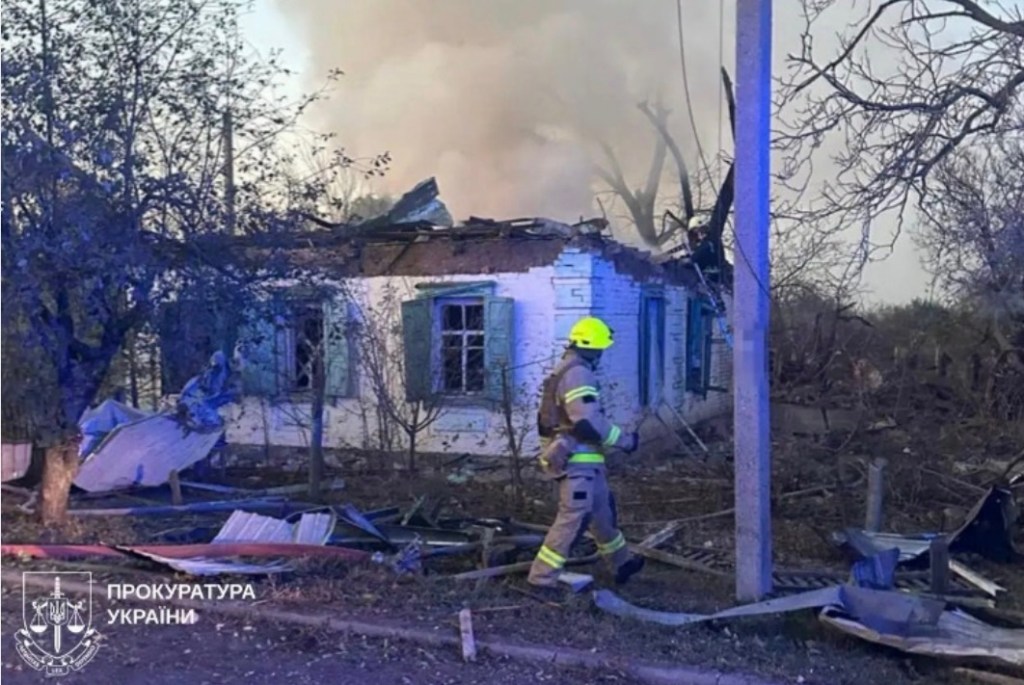
Yet even as the Kremlin projected defiance, the ground beneath it was shifting. Fuel shortages rippled through Russian cities, forcing drivers to queue at empty pumps while state media struggled to mask the scale of collapse. At Zaporizhzhia, a ceasefire billed as humanitarian cloaked a deeper Russian plan to pull the nuclear plant into its own grid. And across Ukraine, new precision weapons struck homes once beyond their reach.
The day revealed a war no longer searching for peace — only new ways to endure destruction.
Moscow’s Explicit Rejection — When the Kremlin Slams the Door
Dmitry Medvedev spoke with the bluntness of a man who wanted no misunderstanding. In twin posts in Russian and English, the former president and current Security Council deputy made clear that Donald Trump’s call for both sides to “claim victory” and seek settlement was meaningless to Moscow. Russia, he said, required victory “with the conditions everyone knows.”
Those “conditions” were the same demands that preceded the invasion: a pro-Russian regime in Kyiv, enforced neutrality that bars NATO membership, the abandonment of NATO’s open-door policy, and the dismantling of Ukraine’s defenses. In other words, capitulation.
What made the statement significant was not its content but its timing. Barely a day after President Zelensky returned from Washington without new weapons commitments, the Kremlin publicly shut the diplomatic door Trump had tried to open. Moscow now viewed negotiation not as opportunity but as weakness — and believed that time was working in its favor.
The Nuclear Calculation — A Ceasefire Concealing a Longer Strategy
The IAEA’s announcement sounded, at first, like progress. Ukrainian and Russian forces had agreed to a localized ceasefire so engineers could repair power lines feeding the Zaporizhzhia Nuclear Power Plant — four weeks into the longest blackout in its history. Director General Rafael Grossi praised both sides for “constructive engagement,” calling external power restoration “crucial for nuclear safety.”
 Voice of Ukraine