From: Transform Ukraine By Douglas Landro / November 9, 2025
Russia fired 503 weapons in a single night—destroying power plants Ukrainian engineers had spent months rebuilding—while a battalion commander faced charges for holding a ceremony that became a Russian target.
THE DAY’S RECKONING
The drones arrived each minute.
Ukrainian air defense operators watched their screens as wave after wave appeared—Shaheds from Crimea, from Kursk, from bases across occupied territories. They fired. They reloaded. They fired again. In the span of one night, they intercepted 406 of 458 drones. Remarkable precision. Heroic effort.
It wasn’t enough.
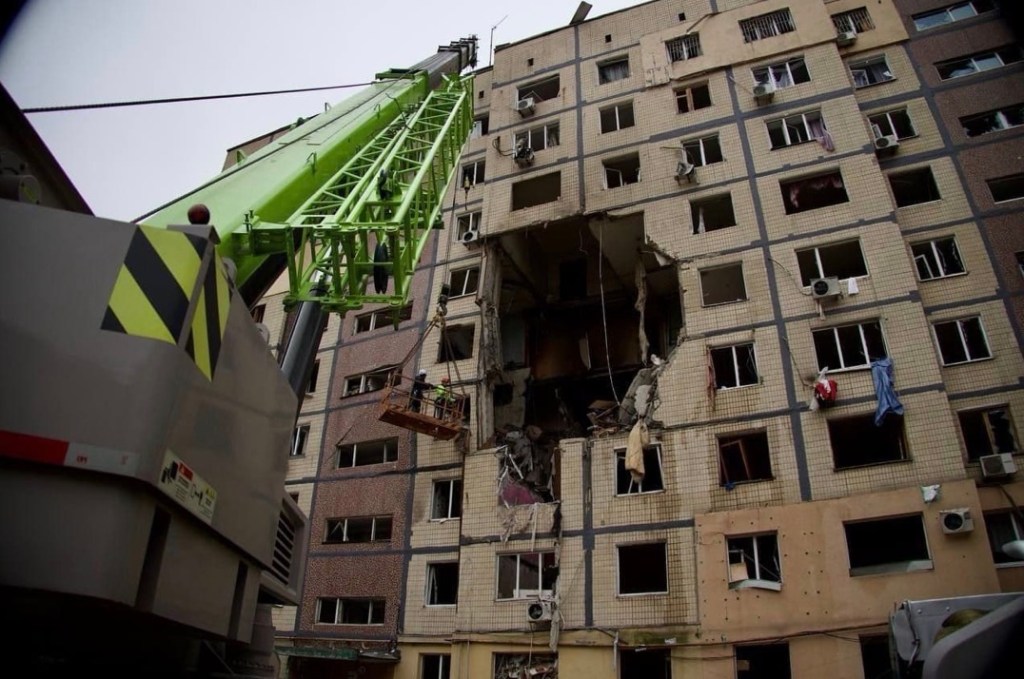
The ballistic missiles came behind the drones. Twenty-five Iskander-Ms. Seven Kinzhals screaming down at Mach 10. Cruise missiles from the Black Sea. In Svitlovodsk, nearly fifteen drones and two missiles concentrated on a single hydroelectric plant. In Kharkiv Oblast, a gas company operator died at his station, trying to keep the heat flowing. In Dnipro, concrete collapsed between the fourth and sixth floors of an apartment building where children slept.
By dawn, state-owned Centrenergo announced what Ukrainian engineers already knew: all their thermal power plants were down. Every turbine they’d spent months secretly restoring—destroyed again. The Zmiivska plant that supplied seven percent of Ukraine’s electricity—destroyed. The Trypilska plant that provided another seven percent—destroyed. Work crews had labored through summer heat and autumn cold, moving equipment at night, camouflaging repair sites, celebrating small victories when generators came back online.
Less than a month after the previous strike, Russia had found them all again.
Three thousand kilometers west in Windsor Castle, President Zelensky stood beside King Charles III as European leaders pledged Tomahawk missiles and long-term security guarantees. Diplomats spoke of commitments and timelines. Meanwhile in Kyiv, Poltava, Odesa, emergency power cuts swept across regions as substations failed. In Dnipro, rescuers dug through rubble looking for survivors. In Horishni Plavni, families woke to darkness and cold.
Two wars were happening simultaneously. One measured in diplomatic language and Western weapons pledges. The other measured in megawatts lost and bodies recovered.
Day 1,354. Russia wasn’t trying to damage Ukraine’s energy system anymore. Russia was racing to destroy it completely before winter arrived. And on this November night, with 503 weapons launched and thermal plants burning, that race was entering its decisive phase.
THE ARITHMETIC OF ANNIHILATION
The Ukrainian Air Force lieutenant watched the numbers scroll across her screen. Twenty-five Iskander-M ballistic missiles from Kursk, Voronezh, Rostov. Ten Iskander-K cruise missiles. Seven Kinzhals—hypersonic monsters traveling at Mach 10 from Tambov Oblast. Three Kalibrs from the Black Sea. And 458 drones, roughly 300 of them Shaheds, launching from Kursk, Oryol, Millerovo, Primorsko-Akhtarsk, and occupied Crimea.
The weapons came from multiple directions simultaneously. This was not improvisation. This was three years of accumulated experience targeting Ukrainian infrastructure, refined into a single overwhelming blow.
Her team shot down 406 drones and nine missiles. Extraordinary performance under impossible conditions. But 26 missiles and 52 drones got through to strike 25 locations. Falling debris hit four more. The mathematics of aerial warfare favored the attacker who could afford to launch hundreds of weapons knowing most would be intercepted. Russia could afford those odds. Ukraine could not afford to fail even once.
 Voice of Ukraine