From: Transform Ukraine By Douglas Landro / November 24, 2025
While negotiators convened in Geneva’s conference rooms, Ukrainian drones turned a Moscow power plant into a pillar of flame—and the contradiction defined the war’s impossible equation.
The Day’s Reckoning
Picture the contradiction: in a Swiss ballroom overlooking Lake Geneva, diplomats debated ceasefires and territorial concessions. Two thousand kilometers east, the Shatura Thermal Power Plant erupted into flame, its explosion visible across Moscow Oblast. One Ukrainian projectile. One flash. Then fire climbing into the Russian sky.
November 23, 2025, was the day diplomacy returned—and the day Ukraine reminded everyone why it still held leverage. While Trump administration officials pressed Kyiv to accept a 28-point peace plan demanding capitulation, Ukrainian forces demonstrated reach that couldn’t be negotiated away: strikes deep into Russia’s heartland, soldiers clearing Russian infiltrators from Pokrovsk’s ruins block by bloody block.
The paradox was brutal. Washington set a November 27 deadline for Ukraine to accept terms that would cede Donbas, cap its military at 600,000 troops, and abandon NATO membership. Russia welcomed the proposal. But on the ground, Russian forces were still dying in Pokrovsk, still failing to break through Zaporizhzhia, still watching their infrastructure burn. Europe arrived in Geneva with a counterproposal rejecting nearly everything Moscow demanded.
It was the war’s central truth again: neither side could dictate terms because neither was winning. Russia advanced meters at catastrophic cost. Ukraine struck deep but couldn’t reclaim territory. Between those realities, diplomats spoke of deadlines meaningless to soldiers defending Pokrovsk or partisans sabotaging trains in Rostov.
By nightfall, Geneva produced joint statements about “productive dialogue.” Shatura still burned. And Ukrainian families listened to air raid sirens while distant politicians debated whether their nation should exist.
Flames Before Dawn: The Strike That Woke Moscow
The projectile came in darkness, streaking low over industrial flatlands east of Russia’s capital. It found the Shatura Thermal Power Plant—120 kilometers from the Kremlin—with surgical precision. One impact. Then the night tore open.
Video footage captured the moment: a brilliant flash turning darkness to day, then a fireball climbing skyward. Black smoke billowed into a column that blotted out stars. Moscow Oblast Governor Andrei Vorobyov claimed power supply remained stable; the fire contained. But footage told a different story: precision interdiction, Ukraine reaching into Russia’s industrial core.
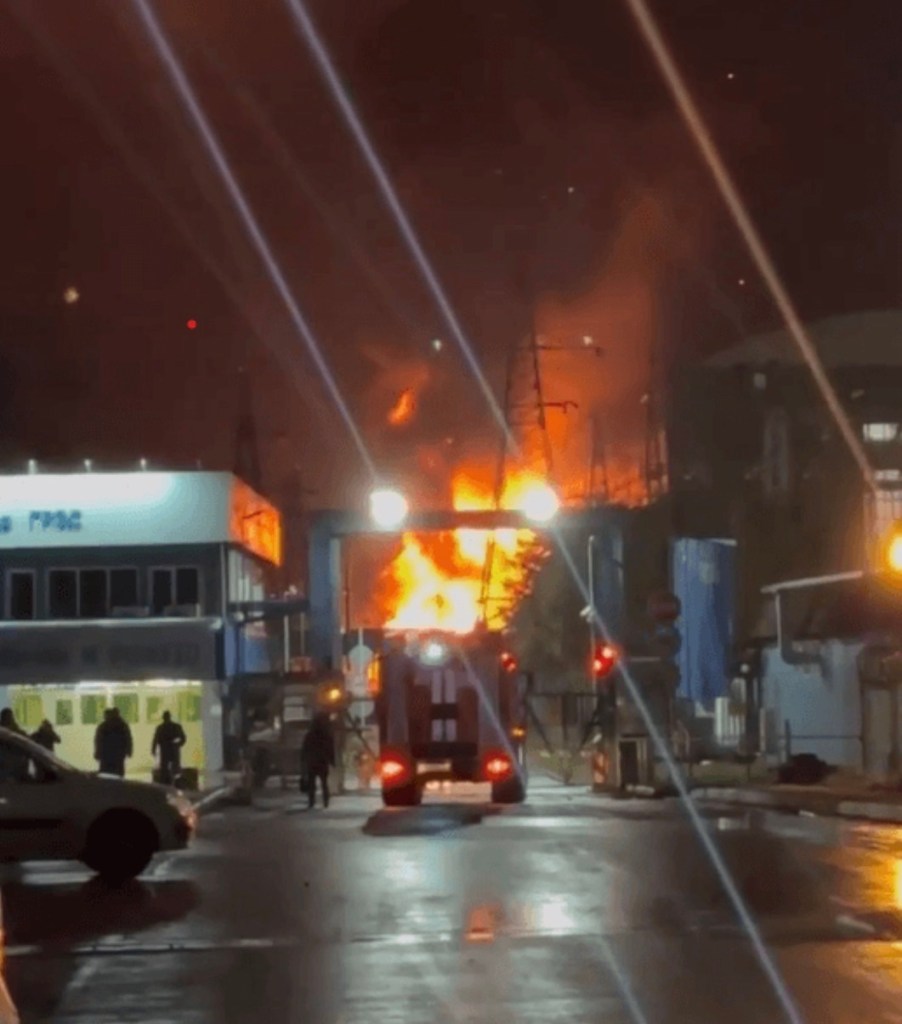
Earlier that night, Moscow’s air defense had scrambled. The mayor reported two drones shot down en route to the capital. Zhukovsky Airport suspended operations. But at least one got through. Shatura sat far enough from Moscow to avoid panic, close enough to send a message: Ukrainian drones could fly 500 kilometers deep and hit targets that mattered.
This wasn’t random terror. Shatura powered Moscow’s industrial suburbs—factories and distribution networks sustaining Russia’s war effort. Striking it was economic warfare. In recent months, Ukraine had intensified exactly these operations: refineries in Saratov and Orsk, oil depots in Crimea, power plants in occupied Donetsk. The pattern was clear: if Russia would grind Ukrainian cities with glide bombs, Kyiv would dismantle the industrial machine feeding Russian aggression.
The timing was no accident. As diplomats gathered in Geneva to discuss terms limiting Ukraine’s military, this strike demonstrated leverage Kyiv still possessed. The smoke from Shatura reminded everyone that compromise extracted under pressure was worthless if one side retained means to inflict unprevented pain.
By morning, Russian state media buried the story. But fire crews still worked at Shatura, and the turbines sat silent. The message burned clear: any peace leaving Ukraine defenseless would be temporary.
Geneva’s Marble Halls: Where Compromise Met Reality
The Swiss conference halls filled with people who believed wars could end with words on paper. Secretary of State Marco Rubio arrived with a 28-point document drafted in secret with Russian counterparts: Ukraine would cede unoccupied Donetsk and Luhansk, cap its military at 600,000 troops, abandon NATO hopes, and prohibit foreign troops on its soil. In exchange, Russia would promise—in Russian law—not to attack again. Security guarantees were vague, echoing the Budapest Memorandum that left Ukraine defenseless in 2014.
 Voice of Ukraine