From: Transform Ukraine By Douglas Landro / December 7, 2025
Russia launched its largest aerial assault in months—704 missiles and drones targeting Ukrainian energy infrastructure, railway stations, and civilian facilities on St. Nicholas Day—even as negotiators in Miami spoke of Moscow’s need to demonstrate “good faith commitment to peace.”
The Day’s Reckoning
St. Nicholas Day began in darkness.
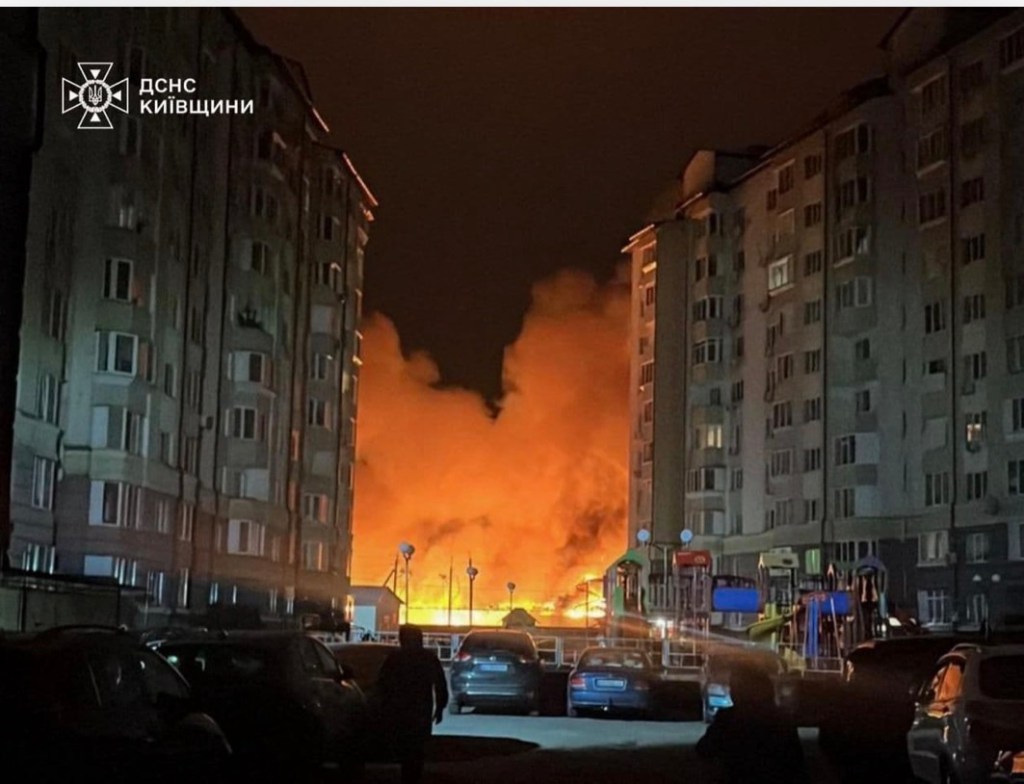
At 1:30 a.m., air raid sirens wailed across Kremenchuk. Kinzhal hypersonic missiles streaked toward the city of 215,000. By dawn, 704 Russian missiles and drones were airborne—targeting power stations, railway hubs, and apartment blocks across Ukraine. A holiday for children became a demonstration of Russia’s vision for peace.
In Miami, negotiators spoke carefully about Russia’s need to show “good faith commitment.” In Fastiv, Russian missiles obliterated the railway station where commuters would have caught morning trains to Kyiv. In Chornobyl, international inspectors documented how February’s drone strike had crippled the protective dome containing reactor No. 4’s radioactive remains. In occupied Zaporizhzhia, Russian forces cut power to Europe’s largest nuclear plant—again.
The arithmetic was brutal: 704 projectiles launched, 585 shot down, sixty strikes landing, twenty-nine locations hit. Energy facilities throughout eight oblasts went dark. Rolling blackouts spread nationwide. A 50-year-old man died in his home in Chernihiv. An 11-year-old boy was wounded in Nikopol. Warehouses storing food and medicine burned in three oblasts.
While diplomats discussed territorial compromises, Ukrainian forces raised their flag in northern Pokrovsk—still holding despite Russian encirclement attempts. While Russia spoke of ceasefire terms, Ukrainian drones struck the Ryazan Oil Refinery for the ninth time this year. While Moscow’s envoys outlined peace proposals, Ukrainian hackers erased 165 terabytes of Russian logistics data.
Day 1,382 revealed Russia’s definition of negotiation: maximum violence as diplomatic leverage. Talk peace, destroy infrastructure. Offer ceasefires, launch 704 missiles. Demand territory you couldn’t capture through combat.
Ukraine’s answer came in multiple domains simultaneously—air defense batteries firing, drones penetrating hundreds of kilometers into Russia, cyber warriors dismantling enemy logistics, infantry holding contested ground building by building.
The distance between words and weapons had never been wider. The gap between diplomatic rhetoric and battlefield reality had never been more impossible to ignore.
Seven Hundred Four Ways to Say “Peace”
The drones began lifting off at dusk on December 5. From Kursk, Oryol, and Bryansk. From Millerovo deep in Rostov Oblast. From occupied Crimea. Six hundred fifty-three Shahed and Gerbera drones, engines whining.
Then the missiles: three Kinzhal hypersonics screaming from 40,000 feet, thirty-four cruise missiles riding low, fourteen ballistic missiles arcing through space. Seven hundred four projectiles total. All aimed at Ukraine. All launched on St. Nicholas Day.
Ukrainian air defense crews tracked them through the night—radar operators watching screens bloom with threats, S-300 batteries swiveling skyward, mobile gun systems racing to intercept points. By morning: 585 destroyed, drones shredded mid-flight, missiles exploding before impact.
But 119 got through.
The targeting pattern revealed Russia’s strategy: substations in eight oblasts, electrical distribution nodes linking regional grids, chokepoints whose destruction would cascade nationwide. Not military installations. Civilian infrastructure. The facilities keeping Ukrainian homes warm and lit in December.
By morning, six oblasts went dark—Odesa, Chernihiv, Kyiv, Kharkiv, Dnipropetrovsk, Mykolaiv. Rolling blackouts spread everywhere else. Anatoliy Zamulko from Ukraine’s energy inspectorate noted Russian precision: strikes specifically targeted “facilities that redistribute electricity between Ukrainian regions.” Maximum disruption from minimum hits.
The Fastiv railway station—obliterated. Not freight. The passenger terminal where commuters catch morning trains to Kyiv. “Electric commuter trains connecting Kyiv with its suburbs,” Ukrzaliznytsia Chairman Oleksandr Pertsovsky emphasized. President Zelensky called it “militarily senseless.”
 Voice of Ukraine