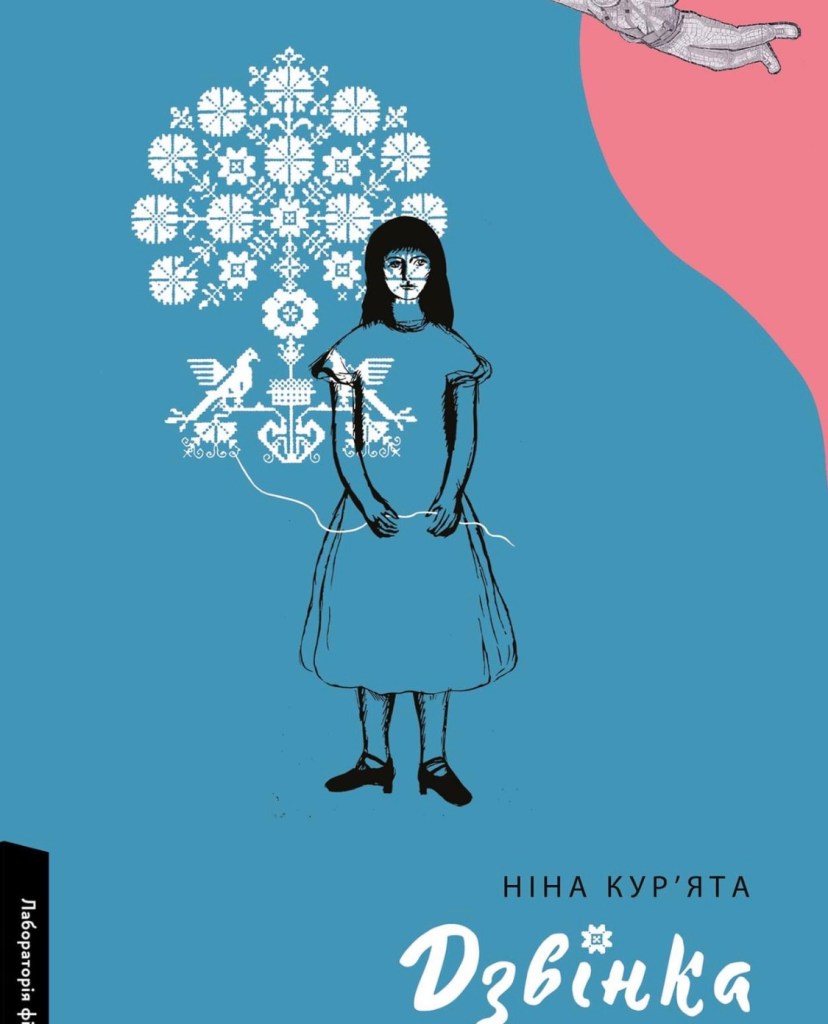
From Maia Mikhaluk in Kyiv (611th day): Today is the Day of Ukrainian Language and Literature.
Linguicide (as part of genocide) has been present in ruzzian-Ukrainian relations for centuries. We can read about it in books, but we have also experienced it personally. We remember how during the Soviet times ruzzian propaganda was promoting the idea that only ruzzian language is the language of intellectuals, the Ukrainian language was for uneducated village people. I was born and grew up in Ukraine, but I remember the school textbook of ruzzian language came under the title “Native Language” (Родной язык), while the Ukrainian language textbook came under the title “Ukrainian Language” as if it’s a foreign language like English. There were fewer hours in the school curriculum for Ukrainian than for ruzzian. Those of us who grew up in the Soviet Union will relate well to the recently published book Dzvinka by Nina Kuriata who is describing what it was like to be Ukrainian speaking in Soviet times. I am reading it now and I am reminded of and amazed at how we took as normal language persecution described in the book.
Ruzzians used language as an aggressive weapon to kill the national cultures of countries they kept under their control (including Ukraine). They also used language as a pretext for war when in 2014 they invaded Crimea and east of Ukraine (Donbas) saying they were coming to protect ruzzian speakers. Earlier they used that as a pretext to invazions to other countries (like Georgia). Having grown up as ruzzian-speaking and in Donbas I know there was never a need for putin’s protection of ruzzian-speakers in Ukraine.
Well, ironically ruzzian invazaion helped to finalize the failure of ruzzifaction of Ukraine. Recent statistics/polls show that in April 2014 only 47% of Ukrainians believed that the Ukrainian language should be the only state language. In March 2022, following Feb 2022 invasion the percentage grew to 83%. In 2012 57% of Ukrainians considered the Ukrainian language their native language, now it’s up to 76%.
More and more people who have grown up speaking ruzzian in their homes are intentionally switching to Ukrainian. That has been the case for our family. When the war started in 2014 our kids intentionally switched to Ukrainian language, but Nick and I were too lazy – we understood Ukrainian but speaking took effort and even though we wanted to switch, we just didn’t get motivated enough. But big invasion in Feb 2022 that almost brought ruzzians to our doorstep gave a lot more motivation. Nick is preaching in Ukrainian and we speak Ukrainian at home and outside of home.
The war helped more Ukrainians to come to realization that our culture and our language are important part of our identity – the very identity that ruzzians want to destroy. In occupied territories, like Crimea or Donbas Ukrainian language is not given even an optional subject in school curriculum. If language was neutral ruzzians wouldn’t be so set on destroying ours.
PS. To my Ukrainian friends I do recommend the new book Dzvinka by Nina Kuriata. I am in the middle of it and loving it. The book is only available in the Ukrainian language.
 Voice of Ukraine
One response to “10/28/2023 – Linguicide (as part of genocide) has been present in ruzzian-Ukrainian relations for centuries”
From Pastor Sergei Nakul (Pastor of Big City Church in Kyiv and military chaplain): They ask me, “Pastor, what’s next?” How long will the war in Ukraine last. Is there any prophecy? I want to find some landmarks”.
I answer, “I don’t know how long the war will last, and as for the prophecies, it’s definitely not my business, but I do know, I’m 100% sure that the Lord is with His children here and now. And it is well enough for me to live and serve in this time. God is with me in all circumstances. I stand on His promises. He will not betray. And it is valuable.
The circumstances of life may change, but the Lord is the same and so are his promises. “Jesus Christ yesterday, today and forever the same”, Hebrew. 13:8.
LikeLike