From: Transform Ukraine By Douglas Landro / June 6, 2025
As Trump Privately Calls Operation Spiderweb “Badass” While Publicly Urging Restraint, Russia Promises Retaliation That Won’t Be “Pretty”
Summary of the Day – June 5, 2025
The contradictions of power played out in stark relief on June 5, as President Donald Trump privately praised Ukraine’s devastating drone strike on Russian bombers as “badass” while publicly warning of Russia’s promised retaliation. Behind closed doors, Trump reportedly admired the audacity of what one adviser described as a “chihuahua” successfully attacking “a much bigger dog.” Yet in public, the American president continued his increasingly detached rhetoric about letting two fighters “go for a while” before intervention. Meanwhile, Ukraine’s forces struck another Russian missile base in Bryansk Oblast, destroying Iskander launchers that had been preparing to attack Kyiv, while Russian drones killed five civilians including a one-year-old child in Chernihiv Oblast. As diplomatic deadlines remain locked “in Trump’s brain” and Russia threatens retaliation for Operation Spiderweb, the gap between private admiration and public policy reveals the complex calculus of a war where small nations can still bloody superpowers.
The President’s Private Praise Meets Public Detachment
Behind the walls of the White House, Donald Trump’s reaction to Ukraine’s Operation Spiderweb told a different story than his public statements suggested. According to sources familiar with his private conversations, the American president described Ukraine’s drone strike on Russian strategic bombers as both “strong” and “badass”—a far cry from his public warnings about escalation.
“He thought it was badass,” one source told Axios, while another confirmed Trump had told a confidant the strike was “pretty strong.” The enthusiasm extended to Trump’s inner circle, where one adviser drew a vivid comparison that captured the operation’s David-versus-Goliath nature, using the metaphor of a “chihuahua” attacking “a much bigger dog.”
This private admiration stands in sharp contrast to Trump’s public posture during his meeting with German Chancellor Friedrich Merz, where he compared the Ukraine war to children fighting in a park or hockey players brawling on ice. “Sometimes you see two young children fighting like crazy,” Trump said. “They hate each other, and they’re fighting in a park, and you try and pull them apart. They don’t want to be pulled. Sometimes you’re better off letting them fight for a while and then pulling them apart.”
The analogy extended to sports: “You see it in hockey. You see it in sports. The referees let them go for a couple of seconds. Let them go for a little while before you pull them apart.” This philosophy represents a fundamental shift toward positioning himself as a neutral arbiter waiting for the optimal moment to intervene—a stance that risks prolonging a conflict where civilians die daily.
The analogy actual falls apart, because if you saw a 6th grader on the playground beating up a 1stgrader to the point of death, you would be morally required to step in and save the younger child.
The Deadline in His Brain: Sanctions Threats Without Specifics
When pressed by reporters about his timeline for imposing additional sanctions on Russia, Trump offered only cryptic assurance: “Yes, it’s in my brain the deadline.” The president refused to specify a date, adding only that “when I see the moment where it’s not going to stop… we’ll be very tough.”
This mental deadline represents the latest in a series of increasingly vague ultimatums from an administration that has repeatedly threatened consequences while avoiding specific commitments. Trump’s reluctance stems partly from his continued hope for a breakthrough: “If I think I’m close to getting a deal, I don’t want to screw it up by doing that,” he explained.
Meanwhile, a bipartisan sanctions bill with overwhelming support—backed by 82 of 100 senators—awaits Trump’s decision. The legislation would impose a 500% tariff on imports from countries purchasing Russian oil and raw materials, but Trump requested that the Senate delay voting until he reviews the measure. “I have to take a look. (Senators) are waiting for me to decide what to do. And I will decide. Maybe very soon,” Trump said, while emphasizing that senators “will be guided by my instructions.”
Strike and Counterstrike: Ukraine’s Expanding Long-Range Campaign
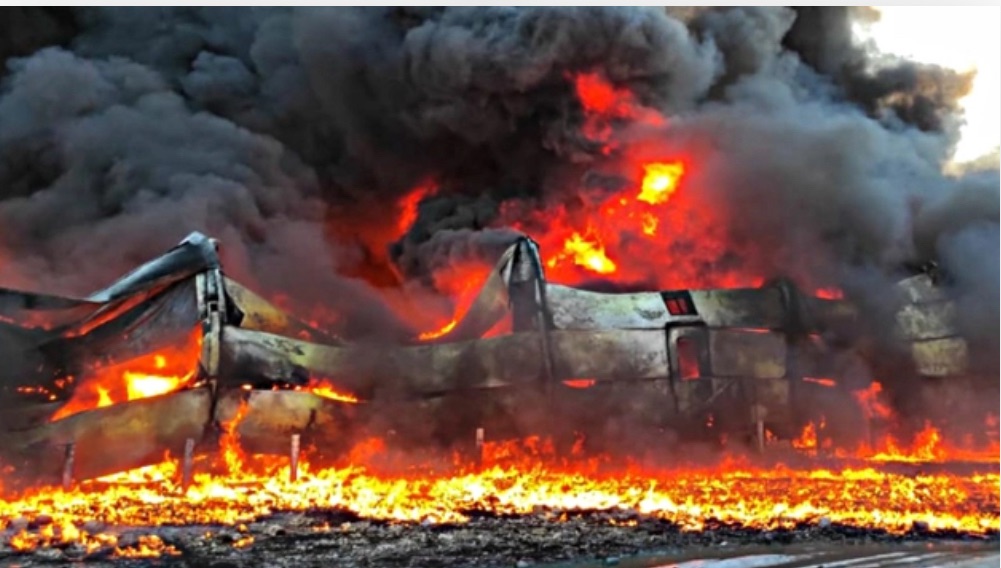
Ukrainian forces demonstrated their expanding capability with a precision missile strike on Russian Iskander launchers near Klintsy in Bryansk Oblast. The attack destroyed one launcher and seriously damaged two others belonging to Russia’s 26th Missile Brigade—forces that had been preparing to launch strikes against Ukrainian cities, likely including Kyiv.
“Thanks to effective reconnaissance and the coordinated efforts of the Armed Forces and the Security Service of Ukraine, the targets were successfully hit,” the General Staff reported, noting no civilian casualties in the operation. The timing proved crucial—the Russian missile unit was caught in the act of preparing to fire, suggesting Ukrainian intelligence had real-time visibility into Russian military activities.

