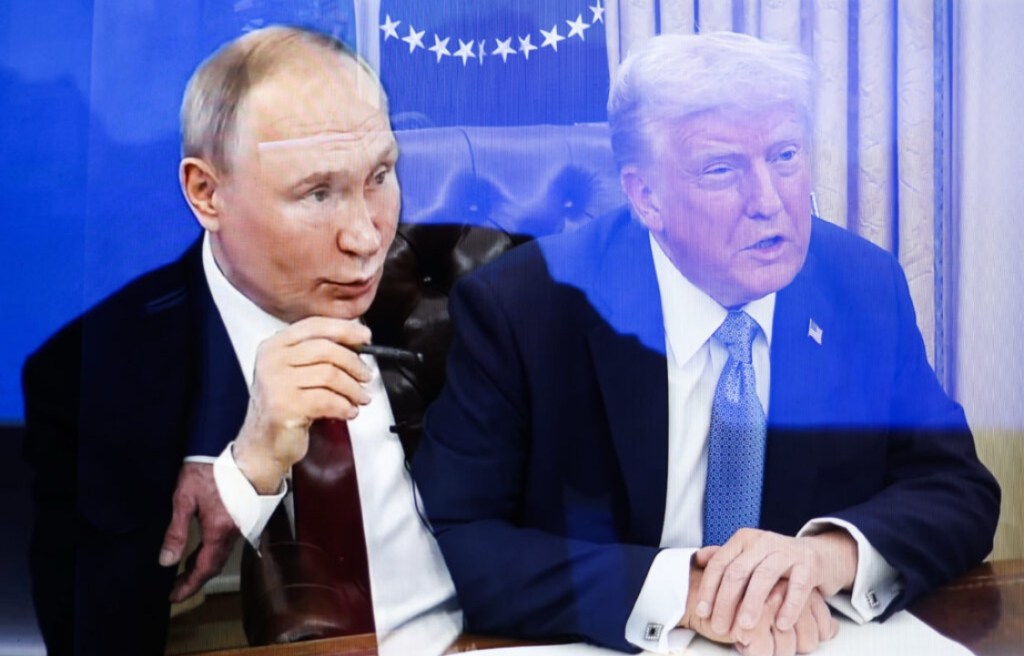
US President Donald Trump has recently changed his tone toward Russian president Vladimir Putin, suggesting that he has “gone crazy” and is “playing with fire.” This highlights the ongoing difficulties of negotiating with the Kremlin. While the Trump administration broadly favors a realist approach to international relations, a more pragmatic assessment of Russia’s capabilities and objectives could better equip the US to achieve its stated goal of bringing the war in Ukraine to an end.
Almost three months ago, Ukraine accepted a US proposal for a thirty-day unconditional ceasefire. So far, Russia has refused to do likewise. Instead, the Kremlin continues to demand a series of preconditions. Meanwhile, Russia has intensified its missile and drone strikes against Ukrainian civilian targets. When Trump recently backed Putin’s proposal for direct negotiations between Russia and Ukraine, the Russian leader then boycotted the subsequent Istanbul talks, sending only a lower-level delegation.
Within the Trump administration, key figures such as Vice President JD Vance, Secretary of State Marco Rubio, and Secretary of Defense Pete Hegseth have all articulated their support for a realist view of international relations. This implies sidestepping abstract ideological objectives and focusing on tangible power factors such as economic size, population, geography, and military strength.
The realist viewpoint is reflected in Hegseth’s assertion that Ukraine returning to its pre-2014 borders is “unrealistic.” It can also be seen in Trump’s statements that Ukrainian President Volodymyr Zelenskyy “does not have the cards” in negotiations with Russia, an assertion that seems far less certain in the wake of Ukraine’s successful recent strikes on Russia’s long-distance bombers.

