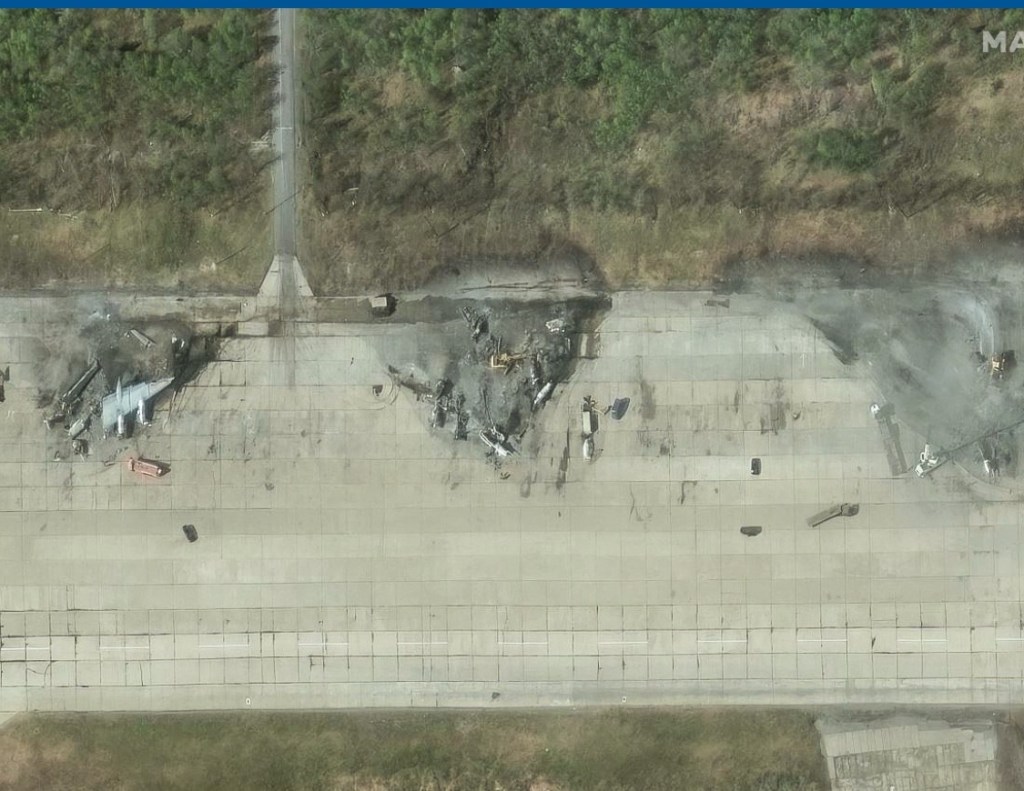
Ukraine’s audacious attack on Russian strategic bombers this past weekend, damaging more than a third of Russian President Vladimir Putin’s capabilities, provided an encouraging glimpse into what should be the future of European and transatlantic defense.
Imagine a world in which Ukraine, working alongside European and North American partners, so convincingly wields advanced technological and defense capabilities that Putin stops his murderous war and agrees to a sustainable peace. That also would send an unmistakable message of transatlantic common cause to Russia’s partners: China, North Korea, and Iran.
However, that outcome can only be achieved if the European Union (EU), after decades of neglect, turns Ukrainian inspiration and a flood of new defense spending announcements into real capabilities and technological innovation. It will also require that the Trump administration unambiguously back its European allies at the June 24-25 NATO Summit in The Hague as the Alliance makes new spending and defense production commitments.
‘A fusion of World War I and World War III’
The good news is that most NATO countries appear ready to agree at the summit to increase their defense spending to 3.5 percent of gross domestic product by 2035, along with an additional 1.5 percent for defense- and security-related infrastructure. For its part, the EU has already approved 800 billion euros in new defense spending across the bloc over the next four years.
 Voice of Ukraine