From: Transform Ukraine By Douglas Landro / October 10, 2025
A day when Europe’s patience ran out, Putin’s excuses fell flat, and NATO moved from caution to confrontation.
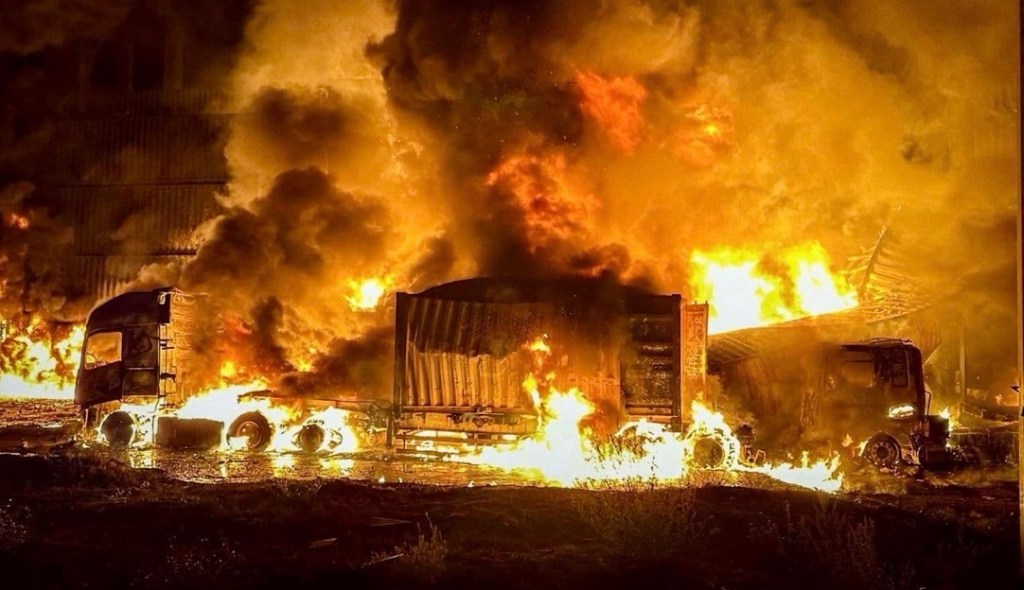
October 9, 2025, marked a decisive shift in the trajectory of the war. In Brussels, the European Parliament voted overwhelmingly to authorize the shooting down of Russian drones and aircraft violating EU airspace—an extraordinary step signaling that Europe’s era of restraint was over. In Dushanbe, Vladimir Putin admitted that Russian air defenders fired the missiles that brought down an Azerbaijani airliner, twisting the truth to deflect blame. Meanwhile, NATO leaders discussed more aggressive engagement rules, and Ukrainian forces extended their reach deep into Russian territory, igniting gas plants and fuel depots. It was a day when diplomacy gave way to deterrence, and when the continent that had endured nearly four years of war decided that words alone would no longer be enough.
When Parliament Says “Enough”
The European Parliament’s patience with Russian provocations finally snapped. Lawmakers voted overwhelmingly to authorize the shooting down of unauthorized drones and aircraft violating EU airspace—transforming cautious diplomatic protests into a concrete military mandate. In one vote, Europe shifted from issuing warnings to preparing to act. Four hundred sixty-nine members said yes to using force against Russian threats, as NATO allies quietly weighed plans to arm reconnaissance drones along the Russian frontier. The divide between diplomacy and deterrence was closing fast.
The resolution passed with 469 votes in favor, 97 against, and 38 abstentions—a decisive signal that Europe would no longer tolerate airspace violations over Poland, Estonia, Latvia, Lithuania, and Romania. Lawmakers condemned deliberate drone incursions targeting infrastructure in Denmark, Sweden, and Norway, though they notably omitted recent flights over Munich Airport that German officials had attributed to Russia.
The resolution urged EU states to take “coordinated, united, and proportionate action against all violations of their airspace, including by shooting down the threats.” It endorsed ambitious new security projects such as the EU’s “drone wall” and Eastern Flank Watch—initiatives that had seemed like futuristic ideas only months ago but now stood as practical responses to a mounting danger.
Members of Parliament also called for expanded sanctions against Chinese entities supplying dual-use goods vital to Russia’s drone and missile programs, and punitive measures against states abetting Moscow’s war—Belarus, North Korea, and Iran. The resolution went further than ever before, declaring that Russia’s sabotage and hybrid attacks across Europe amounted to state-sponsored terrorism, “even if they fall below the threshold of an armed attack.”
Yet the true significance of the day lay not in what the Parliament condemned, but in what it authorized. By explicitly encouraging member states to shoot down airborne threats, Europe crossed a historic line—from defensive restraint to active deterrence. Moscow’s campaign of intimidation through drone incursions and airspace violations would now face consequences measured in steel, not statements.
The Financial Times reported that NATO officials were already discussing stronger measures in response to Russia’s provocations. Proposals included arming intelligence-gathering drones, easing restrictions on pilots’ engagement rules, and expanding exercises near the Russian border. Two officials said talks aimed to standardize rules of engagement among member states—some of which still required visual confirmation before opening fire, while others permitted radar-based or threat-probability responses.
It was the clearest signal yet that NATO was no longer debating whether to respond to Russian aggression, but how fast and how forcefully to do it. After years of deliberate caution, Europe had decided that hesitation was now the greater danger.
Putin’s Non-Apology: Admitting Facts While Dodging Blame
In Dushanbe, Vladimir Putin delivered a masterclass in admitting facts without accepting fault. Meeting with Azerbaijani President Ilham Aliyev, the Russian leader finally conceded what had long been undeniable: Russian air defenders had fired two missiles at an Azerbaijan Airlines passenger jet in December 2024, causing it to crash in Kazakhstan and killing 38 of the 67 people aboard.

