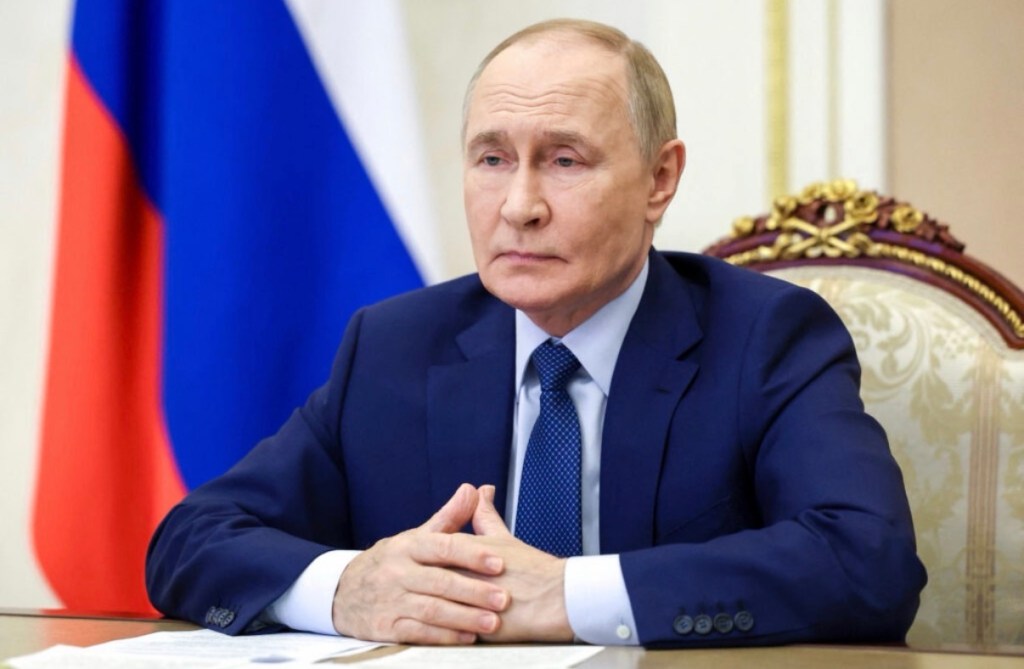
Russian incursions into NATO airspace have become alarmingly commonplace in recent weeks as Vladimir Putin escalates his shadow war against the West. The first clear signal of an upturn in hostile Kremlin activity came in early September when a wave of Russian drones crossed the border into Poland, sparking an armed response from NATO jets. Days later, three Russian fighters violatedEstonian airspace. More recently, suspected Russian drones have forced shutdowns at international airports in a number of European countries including Denmark, Norway, Germany, and the Netherlands.
These incursions are far from unprecedented. Ever since Russia’s invasion of Ukraine began more than a decade ago, the Kremlin has been engaged in a campaign of gray zone aggression throughout the democratic world involving everything from social media disinformation and cyberattacks to infrastructure sabotage and assassinations. Nevertheless, the sharp rise in high-profile incidents over the past month suggests we may now be entering a dangerous new phase.
What is Russia’s objective? Many have speculated that the Kremlin may be seeking to test NATO and assess how well the alliance is adapting to the rapidly changing military realities of drone warfare. This is a reasonable assumption. It is certainly true that each new Russian provocation has yielded a treasure trove of useful intelligence on the current state of Europe’s defenses.
At the same time, it is difficult to believe that Putin is in a position to dramatically expand the current war. The Kremlin dictator has committed the vast majority of Russia’s available military potential to the invasion of Ukraine, leaving him too overstretched to intervene elsewhere on behalf of Russian allies in Armenia, Syria, and Iran. A Russian attack on NATO therefore looks unlikely, at least for now. Instead, the recent surge in Russian hybrid warfare activities is primarily an attempt to intimidate Europe and deter further support for Ukraine.

